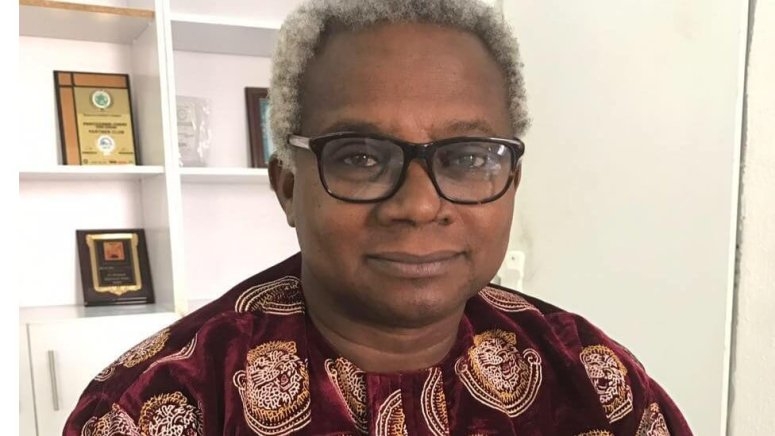
A founding member of the All Progressives Congress, APC, Osita Okechukwu, has strongly rejected former Vice President Atiku Abubakar’s recent claim that zoning is “self-defeating,” calling the statement a clear case of self-denial. Speaking in a state on Tuesday, Okechukwu argued that Atiku, as a major beneficiary of Nigeria’s zoning convention, cannot credibly oppose it. He emphasized that zoning has played a vital role in promoting national cohesion, inclusion, equity, peace, and justice in Nigerian politics.
Okechukwu, who served as Director General of the Voice of Nigeria (VON), made his remarks during an interview with journalists. He questioned how Atiku could have become Vice President without the zoning arrangement that ensured power rotation between the country’s major geopolitical zones. “In the public domain, there is throughout history the law with its legal teeth and the convention with its moral weight, governing human affairs,” he stated. “If there was no zoning arrangement, could Atiku have become Vice President?”
He reminded the public of Atiku’s own political journey, pointing out that he left the Peoples Democratic Party (PDP) in 2014 after President Goodluck Jonathan was selected as the party’s presidential candidate. Okechukwu noted that Atiku’s decision to join the APC was a direct response to the zoning principle that barred him from contesting the presidency. “Has he forgotten why he stormed out of the PDP presidential primary process in 2014 and joined us in APC?” he asked.
Okechukwu also criticized Atiku’s assertion that a Southern opposition candidate cannot realistically unseat a sitting Southern president. He described the remark as “regrettably identity politics,” adding that such rhetoric contradicts the very purpose of zoning, which is to minimize regional bias in leadership selection. He stressed that such statements are “least expected from a statesman.”
Further, Okechukwu challenged Atiku’s claim that by 2027, the South would have held presidential power for about 18 years compared to 10 years for the North. He called this “selective amnesia,” reminding Nigerians that Northern Nigeria had controlled the presidency for over four decades since independence in 1960. “Equity cannot be discussed in fragments or based on convenient arithmetic,” he insisted.
The APC elder’s comments come amid growing debates over Nigeria’s political zoning policy, especially as the 2027 general elections approach. His remarks underscore the ongoing tension between those who see zoning as essential for national unity and those who argue it undermines meritocracy. As Nigeria prepares for its next electoral cycle, the discourse on power rotation will remain central to political discourse.




Leave a Comment