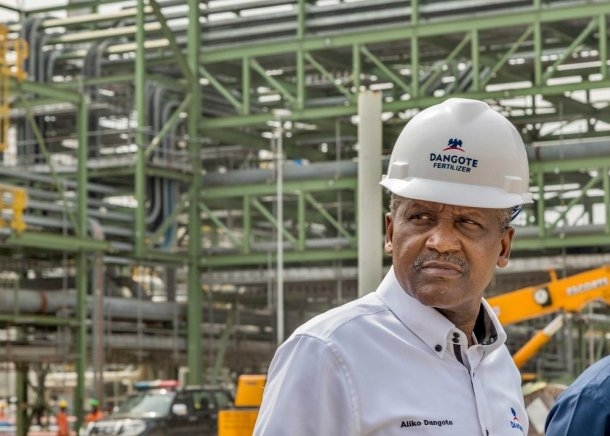
Aliko Dangote has announced plans to develop a massive 20,000-megawatt power generation project across Africa, leveraging the strong cash flow from the recently operational Dangote Petroleum Refinery. The billionaire businessman revealed the ambitious energy initiative during an interview with International Finance Corporation (IFC) Managing Director Makhtar Diop at the IFC headquarters in Washington, as reported by CNBC Africa on May 6. This power programme represents one of the largest private-sector energy ventures ever proposed on the continent and signals a major shift in Dangote Group’s strategic focus beyond refinery operations.
Dangote emphasized that the refinery’s improved financial performance has freed up assets and strengthened the group’s capacity to raise capital for new infrastructure projects. “We have now actually freed up our assets and we can actually raise more money. Our cash flow now is very, very strong,” he stated during the interview. The refinery, with a nameplate capacity of 650,000 barrels per day, reportedly achieved 661,000 barrels per day during testing, exceeding its designed output. This milestone underscores the facility’s potential to reduce Nigeria’s reliance on imported petroleum products and bolster foreign exchange stability.
Nigeria’s current installed electricity generation capacity stands at approximately 13,000MW, though actual supply to the grid remains far lower due to transmission bottlenecks, gas shortages, and operational inefficiencies. A private-sector-led addition of 20,000MW would surpass Nigeria’s existing capacity and could transform the country’s industrial landscape if implemented successfully. The power project is part of a broader investment pipeline that includes liquefied natural gas infrastructure, fertiliser expansion, agriculture, and a deep-sea port with an 80-metre draft capacity.
While Dangote did not disclose the financing structure, timeline, or generation mix for the power initiative, analysts believe it will support integrated industrial operations tied to the refinery, petrochemicals, fertiliser production, and export-oriented manufacturing. This would reduce dependency on the unreliable national grid and enhance self-sufficiency in energy for key industrial zones. The announcement also highlights the growing role of private enterprise in addressing Africa’s critical infrastructure gaps, particularly in energy and logistics.
Dangote Group has not yet specified which African countries will benefit from the power rollout. However, the project aligns with the group’s long-term vision of building integrated infrastructure to tackle structural deficits across the continent. As African nations grapple with underinvestment in energy systems, Dangote’s power initiative could set a new benchmark for private-sector involvement in electricity generation. The project’s success may pave the way for more large-scale, continent-wide energy solutions driven by African business leaders.


Leave a Comment