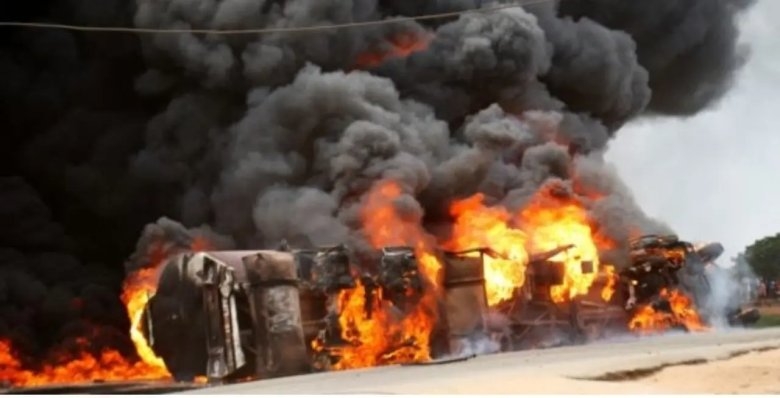
A tragic fuel tanker explosion in Ndem community, Ogoja Local Government Area of Cross River State, has left at least 12 people dead and 26 others severely injured, according to eyewitnesses and police sources. The incident occurred on Wednesday when the tanker, involved in transloading operations, fell into a nearby river and caught fire, engulfing dozens of residents at the scene. The blast and subsequent flames caused widespread panic, with many victims suffering severe burns. Authorities have confirmed that some of the deceased were burnt beyond recognition, making identification difficult.
Eyewitness Anthony Ekeni reported seeing 38 victims at the scene, including 12 bodies that were lifeless. Among the feared dead are the Chairman of the Ogoja Truckers Association and a recently promoted Assistant Superintendent of Police, whose identity remains unconfirmed. The explosion occurred during a routine transloading process, which involves transferring fuel from one vehicle to another, often in unregulated or unsafe conditions. The exact cause of the fire remains under investigation, but early reports suggest the tanker may have been damaged upon falling into the river, triggering the ignition.
The Police Public Relations Officer in Cross River State, ASP Sunday Eitokpah, confirmed the incident and expressed deep grief over the loss of lives. He stated that the bodies of the deceased had been evacuated and handed over to families and relevant authorities, including the Hausa Muslim community, for burial in accordance with Islamic rites. Emergency response teams, including the Divisional Traffic Officer in Ogoja and patrol units, were swiftly deployed to secure the area and manage traffic flow around the site.
Efforts were made in coordination with other stakeholders to rescue trapped individuals and evacuate the injured to the General Hospital in Ogoja for medical treatment. The scene was cordoned off to prevent further casualties and ensure public safety. Reinforcements were also sent to contain the fire and restrict access to the affected area to avoid additional risks. ASP Eitokpah emphasized that a full investigation has been launched to determine both the immediate and underlying causes of the explosion, particularly focusing on the transloading process that led to the disaster.
This incident highlights the dangers associated with informal and unregulated fuel handling practices in Nigeria, especially in rural areas where safety standards are often overlooked. As investigations continue, authorities are urging the public to avoid risky fuel transfer activities and to report unsafe operations to relevant agencies. The tragedy in Ndem serves as a stark reminder of the need for stricter enforcement of safety regulations in the transportation and distribution of petroleum products across the country.




Leave a Comment