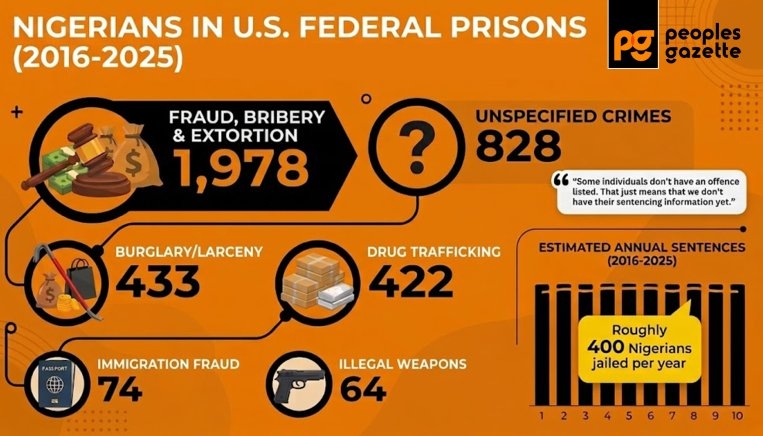
Approximately 400 Nigerians are jailed annually in U.S. federal prisons for various crimes, according to a document exclusively obtained by Peoples Gazette. The document, which spans from 2016 to 2025, lists the names, crimes, and incarceration years of 3,968 Nigerians held in U.S. federal facilities. The data reveals a consistent pattern of Nigerian nationals being sentenced for offenses including fraud, bribery, extortion, burglary, larceny, drug trafficking, immigration fraud, and illegal possession of weapons. These figures highlight the growing presence of Nigerians within the U.S. federal prison system over the past decade.
A detailed analysis of the document shows that the number of Nigerians jailed each year has remained relatively stable, hovering around 400. In 2016, 366 Nigerians were incarcerated. The number increased to 390 in 2017 and peaked at 404 in 2018. It dipped slightly to 393 in 2019 and further to 351 in 2020, possibly due to the global pandemic’s impact on law enforcement and court proceedings. However, from 2021 to 2025, the numbers rose again, starting at 363 and climbing to 439 in 2025, indicating a steady increase in convictions.
Among the most common crimes committed by Nigerians in the U.S. are fraud, bribery, and extortion, which accounted for 1,978 convictions over the ten-year period. Another 828 Nigerians were jailed for “unspecified” crimes, suggesting gaps in data reporting or classification. Additionally, 433 were sentenced for burglary or larceny, while 422 faced prison time for drug trafficking-related offenses. Seventy-four Nigerians were convicted of immigration fraud, and 64 were jailed for illegal possession of weapons and explosives. These figures underscore the diversity of criminal activities involving Nigerian nationals in the U.S.
The document also reveals that Nigerian nationals are not only being prosecuted for financial crimes but are increasingly involved in violent and property-related offenses. This trend may reflect broader migration patterns, economic pressures, or changes in U.S. immigration and criminal justice policies. The data serves as a critical resource for policymakers, legal experts, and diaspora organizations seeking to understand the challenges faced by Nigerians abroad.
Peoples Gazette reported in the first and second quarters of 2026 on additional cases involving Nigerians jailed in the U.S. and other countries, indicating that this issue remains a persistent concern. As Nigeria continues to grapple with emigration and transnational crime, these statistics highlight the need for stronger international cooperation, legal support, and preventive measures to address the root causes of crime among the diaspora. The data also calls for greater transparency and accountability in tracking and supporting Nigerian nationals abroad.




Leave a Comment