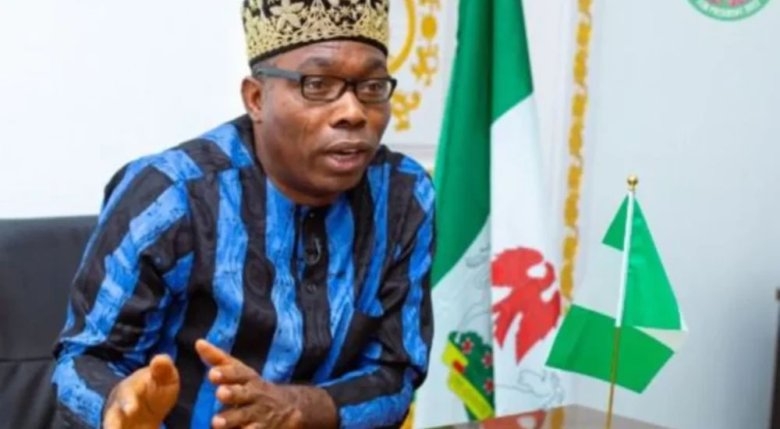
Adewole Adebayo, presidential candidate of the Social Democratic Party (SDP), has publicly criticized President Bola Tinubu and Vice President Kashim Shettima, calling them a negative representation of Islamic leadership in Nigeria. Speaking on Arise Television’s Morning Show, Adebayo argued that the current Muslim-Muslim ticket does not reflect the values taught by the Prophet Muhammad and Islamic leaders. He insisted that Tinubu and Shettima embody the very qualities Islam warns against, including injustice, dishonesty, and lack of compassion.
Adebayo stated that even if Nigerians are seeking Muslim leaders in government, the current administration fails to meet that standard. “They don’t symbolize that,” he said. “They symbolize the opposite.” He emphasized that true Islamic leadership should be marked by justice, truth, honesty, kindness, and charity—qualities he claims are absent in the current leadership. “This kind of leadership where there is no justice, no truth, no honesty, where there is no kindness, and no charity,” he added, “so I don’t think that sheep can come and rob the people one more time, it doesn’t make any sense.”
The current administration of Tinubu and Shettima was elected in 2023 on the platform of the All Progressives Congress (APC), running as a Muslim-Muslim ticket. Ahead of the 2027 presidential election, there had been widespread speculation that Shettima might be replaced by a Christian running mate to broaden the ticket’s appeal. However, President Tinubu recently confirmed Shettima as his running mate for the next election, reinforcing the Muslim-Muslim pairing.
Adebayo’s remarks come amid growing political discourse on religious representation and governance in Nigeria. His critique focuses not on the religion of the leaders, but on their conduct and adherence to moral and ethical standards expected of leaders in an Islamic context. He suggested that the current administration’s actions contradict Islamic teachings, thereby disqualifying them as role models for Muslim governance.
The SDP candidate’s comments have sparked reactions across political and religious circles, with some supporting his call for ethical leadership and others viewing it as an attempt to politicize religion. As Nigeria prepares for the 2027 elections, the debate over religious identity in politics and the expectations of leadership will likely continue to shape public discourse. Adebayo’s stance positions him as a vocal critic of the current administration, emphasizing values over religious affiliation in governance.


Leave a Comment