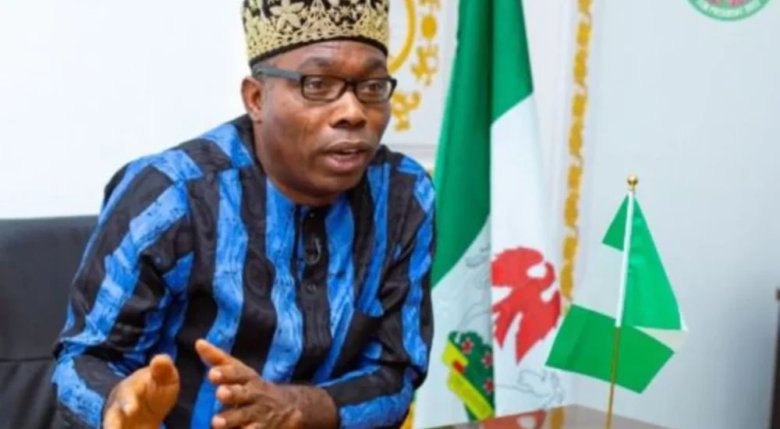
Adewole Adebayo, the Social Democratic Party (SDP) presidential candidate in the 2023 general elections, has declared that President Bola Tinubu has already lost the 2027 presidential election, according to a recent interview on Symfoni TV aired on Wednesday. In a bold assessment of Nigeria’s political landscape, Adebayo argued that Tinubu’s administration has suffered a comprehensive defeat across key domains, including demographics, economics, and politics. He emphasized that the president’s current position is unsustainable and that the nation is ready for new leadership to steer its affairs.
Speaking on the upcoming 2027 election, Adebayo stated that Nigeria requires fresh hands to address the country’s deepening challenges. He likened Tinubu’s current status to the so-called “technical defeat” of Boko Haram, suggesting that while the president may still be in office, his influence and legitimacy have eroded significantly. According to Adebayo, Tinubu’s hopes for re-election rest on a strategy of political distraction, possibly through a truncated transition plan involving a single party fielding two candidates and legal battles to delay or disrupt the electoral process.
Adebayo further criticized Tinubu’s regional appeal, asserting that the president lacks popularity in the South, fails to understand the realities of the North, and is a disappointment in the West. He described Tinubu as an “anathema” in the East and claimed that the center of the country can no longer hold for him politically. This regional alienation, he argued, undermines any realistic chance of a successful re-election campaign.
The SDP candidate also warned that Tinubu may rely on public disillusionment to secure victory, counting on voter apathy born from economic hardship and political frustration. He suggested that the administration might deploy what he called “Renewed Hopelessness” ambassadors to distribute rice and other basic goods to poor Nigerians as a form of electoral bribery. Adebayo sees this as a desperate tactic to manipulate public sentiment rather than address systemic issues.
His remarks highlight growing concerns within Nigeria’s political opposition about the direction of the current administration and the potential for electoral manipulation in 2027. As the next general elections approach, voices like Adebayo’s are likely to gain more traction among citizens seeking change. The coming years will test whether Nigeria’s democratic institutions can withstand political pressure and deliver a fair, transparent, and inclusive electoral process.

Leave a Comment