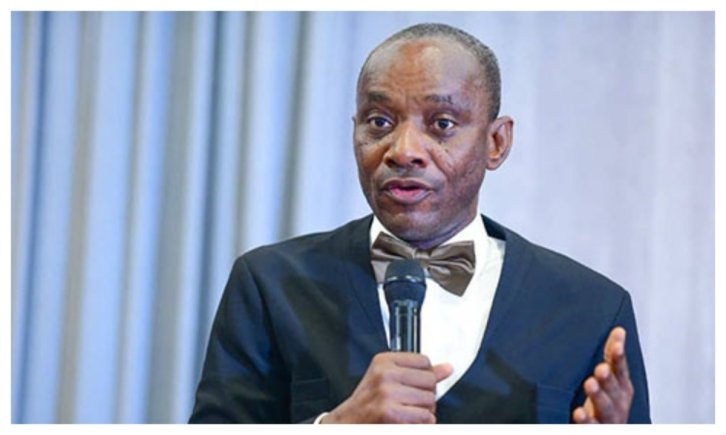
The only viable path for former Vice President Atiku Abubakar and Peter Obi to secure victory in the 2027 presidential election, according to Sam Amadi, Director of the Abuja School of Social and Political Thought, is through a joint Obi/Atiku ticket. In a statement shared via his verified X handle on Friday, Amadi emphasized that Nigeria’s democratic framework does not allow for hierarchical treatment of political figures, stressing that all citizens, including candidates, must be treated as equals. He argued that anyone who garners over six million votes in a presidential election—regardless of whether they won or lost—deserves to be recognized as a full political force, not diminished to a fraction of the national discourse.
Amadi’s comments come amid growing speculation about potential alliances ahead of the 2027 election. He pointed out that Nigeria is a republic where no citizen holds a higher status than another, and political leadership must reflect that principle. He specifically highlighted the 2023 presidential election results, where Atiku Abubakar, representing the Peoples Democratic Party (PDP), secured 6,984,520 votes, while Peter Obi, running under the Labour Party, polled 6,101,533 votes. These figures, Amadi noted, underscore the significant support base each candidate commands, making their combined strength a formidable force in the next election.
He warned against the arrogance of political dominance, stating that no leader should assume the right to control or marginalize others, especially those who have proven their electoral appeal. “You cannot continue to insist on bossing everyone else, even those better than you,” he said, urging political actors to embrace collaboration over competition. Amadi further clarified his position by stating, “For those who care to know, if O cannot win, A cannot win. If O and A need to be together to win, then it should be OA this time, not AO.” This suggests a strategic preference for Obi to lead the ticket, with Atiku as the running mate, based on perceived electoral dynamics.
The call for a joint ticket reflects broader discussions within Nigeria’s political landscape about the need for unity among opposition forces. With the ruling All Progressives Congress (APC) expected to field a strong candidate, opposition parties are increasingly looking at alliances to consolidate voter support. Amadi’s statement adds weight to the growing narrative that the 2027 election may hinge on coalition-building rather than individual campaigns. His remarks also signal a shift in political discourse, where legitimacy is increasingly measured by electoral performance rather than party affiliation or historical dominance.
As Nigeria moves closer to the 2027 general elections, the idea of an Obi/Atiku alliance could become a defining theme in the political conversation. Whether this partnership materializes remains to be seen, but Amadi’s intervention underscores the growing demand for strategic cooperation among Nigeria’s top opposition figures. The 2027 election may well be remembered as the year when unity became the key to challenging the status quo.




Leave a Comment