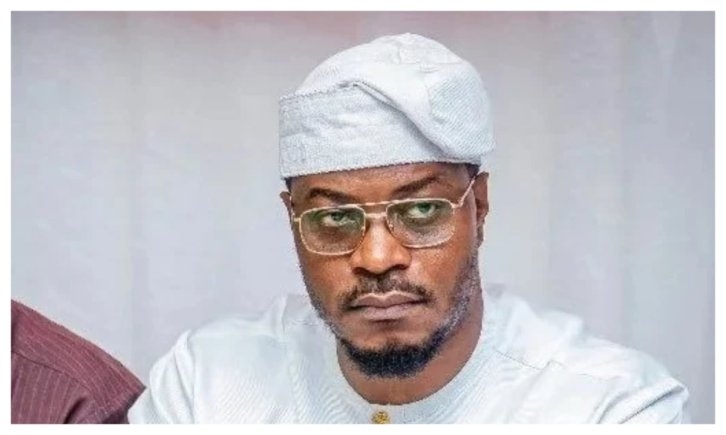
The Lagos State chapter of the All Progressives Congress (APC) has called on African Democratic Congress (ADC) governorship candidate Gbadebo Rhodes-Vivour to demonstrate a deeper understanding of Lagos beyond his recent efforts to learn Yoruba ahead of the 2027 election. In a statement released on Tuesday, APC Publicity Secretary Seye Oladejo welcomed Rhodes-Vivour’s initiative but questioned whether speaking Yoruba alone was sufficient to reflect genuine knowledge of the state’s complex social, cultural, and governance landscape.
Rhodes-Vivour had revealed during an interview on Arise TV that he had hired a Yoruba teacher and was now able to campaign in the indigenous language. He emphasized the importance of language and culture while maintaining that his primary focus remained addressing critical challenges like flooding, housing, and traffic congestion affecting residents across Lagos. The ADC candidate also showcased his growing proficiency by responding “Mo ki gbogbo yin” when greeted in Yoruba, signaling his commitment to connecting with the local populace.
Oladejo acknowledged the value of language as a gateway to understanding people, noting that it carries history, humour, values, idioms, traditions, and worldviews. However, he urged Rhodes-Vivour to go beyond linguistic acquisition and develop a comprehensive grasp of Lagos’ institutions, governance systems, historical context, and socio-economic realities. He stressed that effective leadership requires more than campaign slogans or media appearances.
The APC spokesman also challenged Rhodes-Vivour’s criticism of APC’s governorship candidate, Dr Obafemi Hamzat, pointing out that Hamzat’s extensive experience in Lagos public service—having served as commissioner and deputy governor—should not be dismissed simply because challenges remain. “Rhodes-Vivour may argue that the administration has not done enough,” Oladejo said, “but to suggest that experience has no value is a rather curious argument.”
On the issue of traffic congestion, Oladejo pressed Rhodes-Vivour to present concrete plans, including proposed road infrastructure, funding models, mass-transit strategies, implementation frameworks, timelines, and measurable targets. He highlighted that Lagos is not a small town but one of Africa’s largest urban and economic hubs, facing intense population pressure and transportation demands.
Oladejo emphasized that the 2027 election should center on candidates’ ability to translate promises into actionable policies, not just their performance on television. He reiterated that governance involves institutions, budgets, planning, infrastructure, security coordination, and daily administrative decisions. He called on Rhodes-Vivour to allow Lagos residents to assess his record, plans, and capacity for leadership, rather than focusing primarily on criticizing opponents.
“2027 is not an audition for television,” Oladejo concluded. “It is a conversation about the future of Lagos.”
Leave a Comment