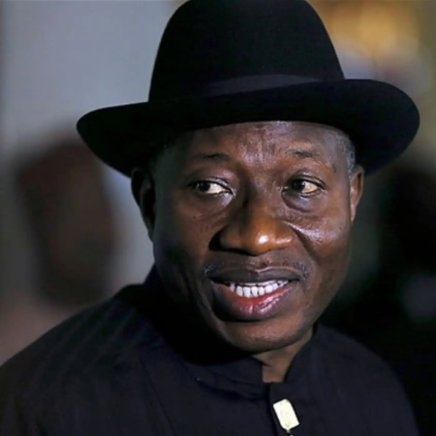
Former President Goodluck Jonathan’s potential return to presidential politics in 2027 remains a topic of intense debate, with political analysts in Kano offering contrasting views on his viability, especially within the Northern political bloc. Kabiru Ojo, a political analyst, has expressed skepticism about Jonathan’s chances, citing regional politics, power rotation concerns, and elite distrust as key barriers. He argues that while ordinary Nigerians in the North may nostalgically recall Jonathan’s time in office due to perceived better economic conditions, Northern elites are likely to resist his comeback over fears of political retaliation for the 2015 election defeat.
Ojo highlighted that Jonathan’s possible candidacy, announced by the Tanimu Turaki-led Interim National Working Committee of the Peoples Democratic Party (PDP), has not been confirmed by Jonathan’s camp. His Special Adviser, Jude Imagwe, dismissed claims that the former president had accepted the nomination or purchased any form, stating, “There is no suggested evidence that my boss has purchased or obtained any form.” Imagwe emphasized that any decision on Jonathan’s candidacy must come from the former president himself, not from external declarations.
Despite the PDP’s announcement, Ojo believes Jonathan’s return would face resistance in the North, particularly if a Northern candidate is available. He noted that Northern political elites may view Jonathan’s comeback as an opportunity for payback, recalling how a coalition was formed against him in 2015. However, he also suggested that Jonathan’s entry into the race could strategically disrupt President Bola Tinubu’s path and prevent a one-party dominance in the 2027 elections.
On the issue of power rotation, Ojo stressed that it is a political arrangement, not a constitutional mandate. Since 1999, the South has produced three presidents—Olusegun Obasanjo, Goodluck Jonathan, and Bola Tinubu—while the North has had two—Umaru Musa Yar’Adua and Muhammadu Buhari. This imbalance, he said, fuels ongoing debates about fairness and zoning ahead of the next election.
In contrast, another analyst, Aminu Rabiu, believes Jonathan’s post-presidency image has significantly improved. He argued that the performance of Buhari and Tinubu has led many Nigerians, especially in the North, to reassess Jonathan’s tenure. “Without fear of contradiction, I can say that former President Goodluck Jonathan’s post-presidency image has greatly improved,” Rabiu said. He noted that Jonathan, once criticized for corruption and insecurity, is now seen as a true democrat who has contributed to peace and democracy across Africa through election observation and mediation roles.
Rabiu added that if Jonathan were to contest against Tinubu, he believes the Northern electorate would favor the former president. However, he cautioned that Jonathan’s political chapter may be closed, noting that he served a total of six years—first as Acting President from 2009 to 2010, then as Executive President from 2010 to 2015. He concluded that while Jonathan’s image has improved, he personally believes he should not return to the presidency, though he acknowledged that the law will ultimately decide.
This debate comes amid a pending legal case in the Federal High Court in Abuja, which is set to deliver judgment on May 26 regarding Jonathan’s eligibility to contest the 2027 election. The suit argues that his succession in 2010 and re-election in 2011 constitute two constitutional terms, potentially disqualifying him. The outcome of this case may significantly influence the political landscape as Nigeria approaches the next general election.

Leave a Comment