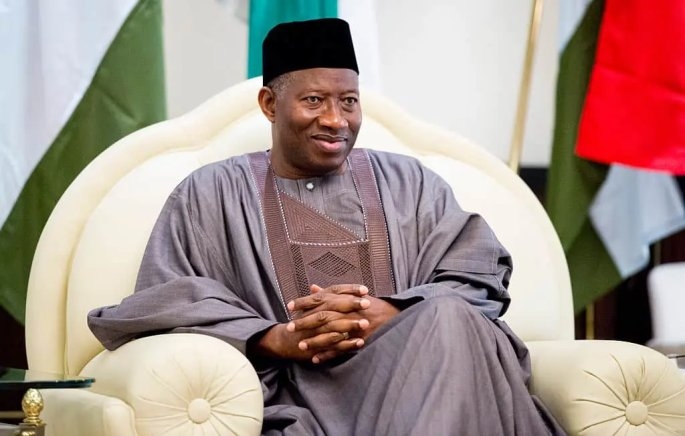
As the 2027 presidential elections approach, former Nigerian President Goodluck Ebele Jonathan has urged Nigerian youths to actively engage in the electoral process, emphasizing the importance of voter participation. Speaking in Abuja on Thursday, Jonathan addressed a large group of young people who visited his residence to appeal for his return to the presidency. He called on them to obtain their Permanent Voters Cards (PVCs) and take part in the upcoming elections, stressing that their involvement is crucial for a healthy democracy.
Jonathan expressed concern over the growing voter apathy in Nigeria, noting that many young citizens are disengaged from politics. He told the youths, “Probably 50% of you don’t even have voters card and you are asking me to go and contest the election.” His remarks highlight a broader challenge facing Nigeria’s electoral system—low youth turnout and lack of interest in civic duties. He urged the Independent National Electoral Commission (INEC) to pay close attention to this trend and take steps to re-engage young voters.
Jonathan’s comments come amid increasing calls from various quarters for his political comeback. Despite not officially declaring his intention to run in 2027, his name continues to surface in political discussions. The former president, who served as Nigeria’s head of state from May 2010 to May 2015, was first sworn in following the death of President Umaru Musa Yar’Adua. He was later re-elected after winning the April 2011 presidential election, making him the first president from the Niger Delta region.
Although Jonathan lost the 2015 election to Muhammadu Buhari, his tenure remains a significant chapter in Nigeria’s political history. His leadership was marked by efforts to combat Boko Haram insurgency and manage the country’s economic challenges during the oil price crash. However, his legacy is also debated, with critics pointing to security issues and economic mismanagement during his time in office.
Some political analysts have pointed out that the Nigerian Constitution does not permit a person to be sworn in as president three times, which could pose a legal barrier to Jonathan’s potential return. Nevertheless, his supporters argue that he remains a unifying figure who can bring stability to the nation. As the 2027 elections draw closer, Jonathan’s call for youth engagement may signal a broader campaign to reinvigorate democratic participation across Nigeria.
The former president’s message underscores the need for renewed civic responsibility, especially among the youth, who make up a large portion of the electorate. His appeal to INEC and young Nigerians alike suggests a growing awareness of the importance of voter education and electoral reforms. With Nigeria’s future at stake, Jonathan’s words may inspire a new wave of political involvement ahead of the next general elections.



Leave a Comment