The U.S. Justice Department has announced the results of a surge in resources to protect Americans from criminal scam networks and online fraud following President Trump’s Executive Order 14390, which directed a government-wide crackdown, resulting in over 400 cases against over 800 defendants.
In the month leading up to the announcement alone, the DOJ’s Criminal Division said it filed and unsealed charges against over 30 scam defendants.
Among them are cases involving Southeast Asian scam centres engaged in cryptocurrency investment fraud, fraud schemes perpetrated by Nigerian nationals involving false claims that a victim must pay fees to receive an inheritance and a list broker in Mexico who sold names and contact information of elderly Americans to dozens of scammers.
Others are a cremation services provider who used bait-and-switch pricing in violation of a court order and obscured his true location from grieving families, the operator of a Peruvian call centre that contacted Spanish-speaking Americans and told them they were required to pay for English language-learning products, or they would be arrested or deported and a dozen defendants, including several Jamaican nationals, charged with engaging in a sweepstakes scheme that defrauded elderly Americans.
There is also the case of a Nigerian national extradited from the United Kingdom for targeting U.S. service members in a scheme to steal their military pay.
These actions include new charges, extraditions, guilty verdicts, and criminal sentences. U.S. prosecutors and agents also helped law enforcement in more than 10 countries raid foreign scam call centres and compounds that targeted Americans, according to a statement on Tuesday.
“Predatory scams against the American people will not be tolerated,” said attorney general Todd Blanche. “The unprecedented results of this surge are just the beginning.”
FBI director Kash Patel disclosed that through the agency’s ‘Operation Blackout’, nearly $17 billion in illicit funds were seized, more than 14,000 digital devices were taken, over 11,000 Americans were directly warned about scam attempts, and more than $690 million in potential victim losses were prevented.
According to Gallup, 10% of U.S. adults experienced a scam last year, either directly or through someone in their household. Nearly three in four scam victims experienced a negative effect on their mental health or well-being.
Gallup also reported that Americans lost an estimated $68 billion to scams in 2025 alone. These scams include cryptocurrency investment scams, financially motivated sextortion, government imposter schemes, and other predatory schemes that collectively cost Americans billions of dollars, with many families losing their life savings.
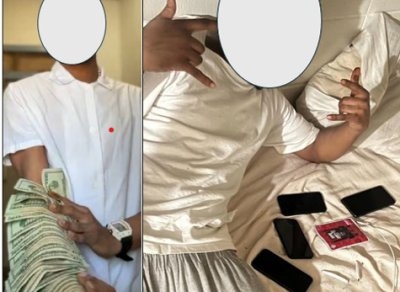
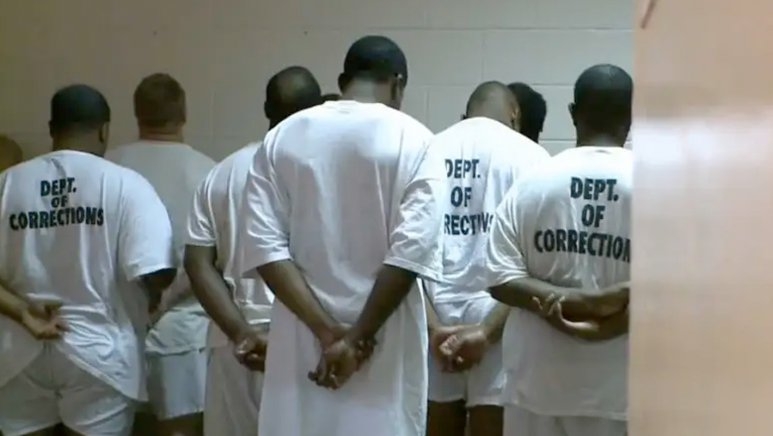
In one scam charged this month, current and former members of prison gangs in Georgia used contraband mobile phones to falsely tell victims that they missed jury duty and would be arrested if they failed to pay a “fine.” 14 individuals were charged in three indictments in federal and state courts for participation in these schemes, and another 17 defendants were charged in state court for a scheme to smuggle contraband mobile phones, often used to perpetrate fraud schemes and other crimes, into Georgia prisons. Websites that were used by inmates to commit jury duty imposter schemes were seized. Below are social media posts by Georgia prison inmates flaunting the proceeds of fraud schemes and contraband mobile phones used to contact victims.
We have recently deactivated our website’s comment provider in favour of other channels of distribution and commentary. We encourage you to join the conversation on our stories via our Facebook, Twitter and other social media pages.




Leave a Comment