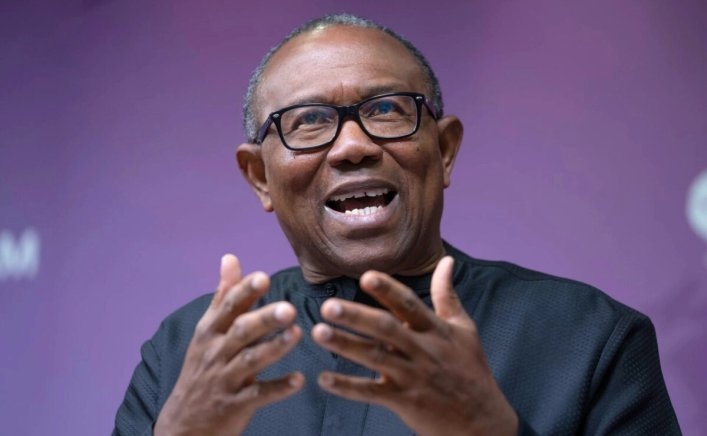
Deputy Financial Secretary of the African Democratic Congress (ADC), Oladimeji Fabiyi, has sharply criticized former Labour Party presidential candidate Peter Obi over his recent political move, calling him a self-serving leader who prioritizes personal interests over public service. Speaking during an interview on Channels Television’s ‘Politics Today’ programme on Tuesday, Fabiyi expressed disappointment in Obi’s decision to defect from the ADC to the Nigerian Democratic Congress (NDC). The development has sparked renewed debate within Nigeria’s political landscape, especially as Obi continues to position himself as a reformist figure.
Fabiyi’s remarks came in response to Obi’s recent switch in political allegiance, which has been widely discussed across media platforms and political circles. He argued that Obi lacks the courage to confront real challenges and is more focused on advancing his own political ambitions than serving the people. “Peter Obi is not a man who likes to face challenges; he is not a leader who wants to fight for the people; he wants to fight for himself,” Fabiyi stated clearly during the interview.
The ADC official acknowledged that Obi had publicly stated he did not leave the party due to pressure from figures like Atiku Abubakar or David Mark, but rather because he felt uncomfortable with certain internal dynamics. Fabiyi welcomed this explanation, saying it was honest, but still maintained that Obi’s actions reflect a lack of commitment to collective leadership. He emphasized that true leadership requires sacrifice, resilience, and the willingness to stand firm even in difficult situations.
The defection has raised questions about the stability of political alliances in Nigeria, particularly as the 2027 general elections loom. Obi’s move to the NDC, a relatively new party, signals a strategic shift that could influence voter perceptions and party dynamics. While some see it as a bid to consolidate support ahead of future elections, others, like Fabiyi, view it as a sign of political opportunism.
Fabiyi’s comments are likely to deepen the divide between factions within the broader opposition space. His criticism underscores the ongoing tensions within Nigerian politics, where personal ambition often intersects with ideological alignment. As political parties continue to reposition themselves, Obi’s next moves will be closely watched by analysts and voters alike.
The political landscape in Nigeria remains fluid, and Obi’s decision to join the NDC could mark a turning point in his campaign for national leadership. His ability to build a credible platform and attract widespread support will determine whether this shift proves beneficial or damaging to his long-term political aspirations.



Leave a Comment