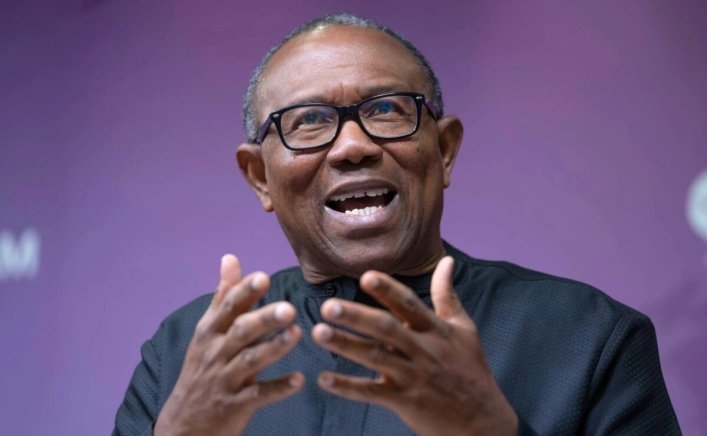
Peter Obi, former presidential candidate of the Labour Party and prominent chieftain of the African Democratic Congress (ADC), has accused the Independent National Electoral Commission (INEC) of being manipulated by the federal government to undermine opposition parties, particularly amid the ADC’s ongoing leadership crisis. Speaking during an interview on Arise TV’s Prime Time, Obi expressed deep concern over INEC’s decision to withdraw recognition from the party leadership headed by former Senate President David Mark. He suggested the move was not entirely independent, stating, “Somebody is pushing this,” and hinting at possible political interference behind the commission’s actions.
Obi questioned why individuals who previously criticized undemocratic practices are now using INEC to frustrate opposition groups. He emphasized that a government committed to national progress should encourage strong opposition, not weaken it. “If a government wants progress, it will support strong opposition,” he stated, drawing a historical parallel to late President Umaru Musa Yar’Adua, who intervened positively during a political crisis in the All Progressives Grand Alliance (APGA) despite ongoing court proceedings.
INEC has defended its decision, asserting that it was based on legal grounds and that the matter remains subject to judicial determination. However, Obi challenged the commission’s position, noting that the very issue of legality is what courts are meant to resolve. “They said they were obeying a court. Well, that is one of the things that will be decided by a court,” he remarked, highlighting the irony and potential overreach in the current situation.
The ADC has been mired in a protracted leadership dispute, with rival factions claiming control of the party’s structure, raising serious concerns about internal cohesion and readiness for future elections. Despite these challenges, Obi affirmed his support for the party’s planned national convention, scheduled for April 14. “I will definitely be there,” he declared, showing confidence in the process and its outcome.
He acknowledged the possibility that INEC might not recognize the convention’s results, but remained cautiously optimistic, suggesting the matter could ultimately be resolved through the judiciary. “Let’s see what happens,” he said, underscoring the need for legal clarity and institutional independence. The ongoing crisis underscores the fragility of party structures in Nigeria’s political landscape and highlights the critical role of electoral bodies in shaping democratic outcomes.
As the ADC navigates legal battles and internal divisions, the outcome of the April 14 convention could have significant implications for the party’s future and its ability to position itself as a credible alternative in Nigeria’s 2027 general elections.



Leave a Comment