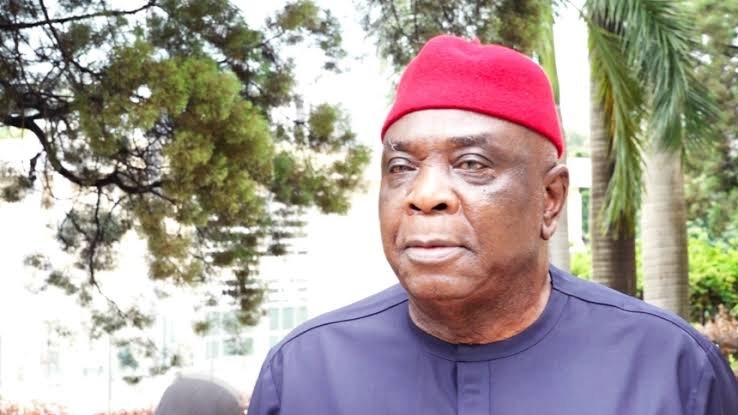
A chieftain of the Peoples Democratic Party (PDP), Dan Ulasi, has stated that the growing political alliance between Peter Obi and Rabiu Kwankwaso signals a deliberate push toward national consensus ahead of upcoming elections, emphasizing the strategic importance of cross-regional collaboration in Nigeria’s political landscape. Ulasi made the remarks during an appearance on Arise Television’s Morning Show on Thursday, highlighting the increasing synergy between two influential figures who represent different parts of the country. He stressed that their partnership is not merely symbolic but a calculated move to build bridges across Nigeria’s diverse regions, especially as the nation prepares for future presidential elections.
Ulasi pointed out that both Peter Obi and Kwankwaso are prominent names in their respective zones—Obi in the South and Kwankwaso in the North—making their collaboration a significant development in the country’s political dynamics. He noted that such an alliance could reshape the political terrain by uniting key stakeholders from different ethnic and regional backgrounds. According to Ulasi, this growing alignment reflects a broader effort to create a unified front capable of challenging the status quo and delivering a more inclusive leadership.
He further explained that the political timing is favorable, citing the “unwritten law” that suggests the South should have eight years of presidential tenure after the North’s eight-year rule under President Muhammadu Buhari. Ulasi believes that with four more years remaining in the southern cycle, the stage is set for a southern candidate to emerge as president. He expressed confidence that if Obi and Kwankwaso continue to strengthen their collaboration, it could lead to a successful presidential bid from either of them, ushering in a new era of development and progress for Nigeria.
Ulasi also emphasized the PDP’s support for Peter Obi, stating that the party sees him as a strong contender for the presidency. He claimed that based on current political trends and public sentiment, Obi has more than a 60 percent chance of emerging as Nigeria’s next president. This assessment underscores the growing momentum behind Obi’s political movement, particularly within the PDP and among other opposition groups seeking a united front against the ruling party.
The development comes at a time when Nigerian politics is increasingly defined by regional balancing and coalition-building. As the 2027 elections draw nearer, figures like Obi and Kwankwaso are seen as pivotal in shaping a new political narrative that transcends traditional divides. Their collaboration may prove to be a turning point in Nigeria’s democratic journey, offering hope for a more cohesive and development-focused leadership in the years ahead.



Leave a Comment