No Presidential Candidate Can Win Nigeria Without Northern Votes, Says Buhari’s Minister Dalung

No Presidential Candidate Can Win Nigeria Without Northern Votes, Says Buharis Minister Dalung

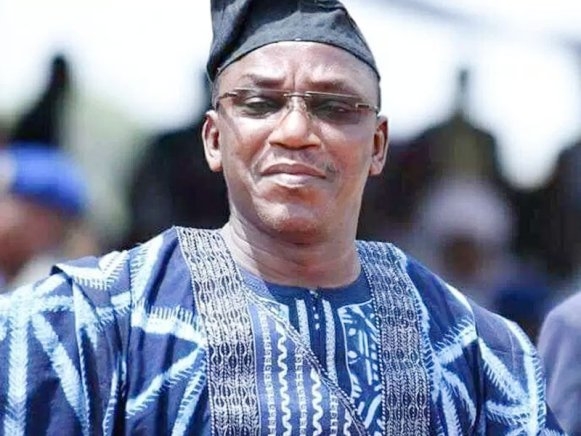
Solomon Dalung, former Minister of Youth and Sports Development, has declared that no presidential candidate can win Nigeria’s next election without securing votes from Northern Nigeria, a statement made during the African Democratic Congress (ADC) primaries in Nasarawa State. The announcement came as the ADC commenced its internal elections for legislative positions, including the House of Assembly, House of Representatives, and Senate, in Lafia. Dalung, who is also the Chairperson of the ADC State Election Committee for Nasarawa, emphasized the political significance of the North during his monitoring of the primary process.

He stated firmly, “You can’t win an election in Nigeria without support from the North. You cannot. The North is mainly ADC.” His remarks highlight the ADC’s growing influence in the region and its strategic positioning as a key political force in Northern Nigeria. Dalung’s comments suggest a shift in Nigeria’s political landscape, where regional affiliations are once again shaping electoral outcomes.

Dalung went further to argue that Nigeria has returned to a system of regional politics, similar to the structure seen during the First Republic. He noted that political parties are now increasingly aligned with specific ethnic or regional identities, rather than national unity. “We are now focusing on regional politics in Nigeria. What took place in the first republic is similar to what is happening now. So, every region has its party,” he said.

He pointed out that the Igbo population has largely rallied behind the All Progressives Grand Alliance (APGA), while the All Progressives Congress (APC) is seen as dominated by President Bola Tinubu and his allies. Meanwhile, the Peoples Democratic Party (PDP) has, according to Dalung, been weakened in the South under former President Goodluck Jonathan’s leadership. These observations reflect a broader narrative of regional realignment in Nigerian politics, where parties are increasingly perceived as instruments of regional interests.

The ADC’s primary elections in Nasarawa State are seen as a test of its organizational strength and grassroots appeal. The party’s focus on Northern Nigeria positions it as a potential alternative for voters disillusioned with the dominant APC and PDP. Dalung’s presence and statements underscore the ADC’s ambition to become a major player in national politics, particularly in the North.

As Nigeria approaches the next general elections, the ADC’s growing footprint in Northern states may influence the dynamics of presidential and legislative contests. The party’s ability to mobilize voters in the North could determine its relevance in shaping the country’s political future. With regional politics resurfacing, the ADC’s strategy may offer a new model for political engagement in Nigeria.