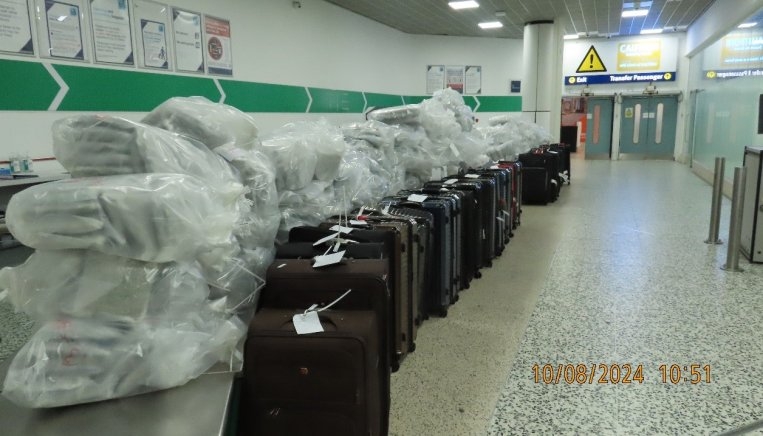
A Nigerian national, Gideon Oluwasetemi Olumoyegun, has pleaded guilty to his role in a major drug smuggling operation that aimed to bring 460 kilograms of cannabis worth £13.8 million into the United Kingdom through Birmingham Airport. The 26-year-old, who resides in Dagenham, was arrested alongside ten other couriers in August 2024 by Border Force officers during a coordinated crackdown. The drugs were discovered hidden inside 22 suitcases, each containing 20 kilos of vacuum-packed cannabis with a thin layer of clothing on top to conceal them.
The group arrived in the UK on the same flights from Thailand via Paris Charles de Gaulle Airport, indicating a well-orchestrated and international criminal network. Birmingham Crown Court heard that each courier carried two suitcases, making the total weight of seized cannabis 460 kilos. Eight of the suitcases contained Apple AirTag trackers, suggesting efforts to monitor the movement of the packages or to evade detection. This level of sophistication underscores the growing complexity of cross-border drug trafficking operations targeting the UK.
While several members of the gang were convicted following a four-week trial, Mr Olumoyegun admitted guilt during earlier hearings. He is scheduled to be sentenced on September 3, while the others will face sentencing on October 22. The National Crime Agency (NCA) emphasized the extensive planning behind the scheme, describing it as a “sophisticated attempt” to flood the UK market with illegal narcotics. Paul Boniface, senior investigating officer at the NCA, praised Border Force for their critical role in intercepting the shipment.
He warned potential traffickers: “Anyone who is approached to smuggle drugs into the UK should take this as a sign; you will not succeed, and if you try, you will face justice.” The seizure highlights ongoing efforts by UK authorities to disrupt transnational drug networks, particularly those exploiting air travel routes. Nigeria continues to feature prominently in such operations, with nationals often recruited or coerced into carrying drugs across continents.
This case serves as a stark reminder of the dangers and legal consequences associated with drug smuggling. Authorities remain vigilant, using intelligence and technology to detect and dismantle these criminal enterprises. As the UK strengthens its border security measures, similar operations may become more common in the fight against organized crime. The outcome of this case could influence future sentencing trends and deterrence strategies in combating drug trafficking.





Leave a Comment