NDC’s Dickson Claims Little Difference Between Civilian and Military Dictators in Tinubu Address

NDCs Dickson Claims Little Difference Between Civilian and Military Dictators in Tinubu Address

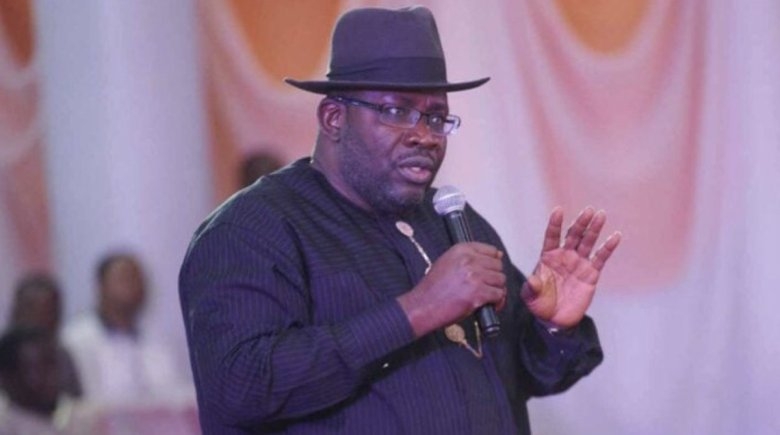
Nigeria Democratic Congress (NDC) National Chairman, Seriake Dickson, has issued a strong warning to President Bola Tinubu against actions that could shrink Nigeria’s democratic space, emphasizing that undermining constitutional institutions makes little difference between a civilian dictator and a military ruler. Speaking during the Diplomatic Digest 6th Anniversary Lecture, Dickson stressed the need to protect Nigeria’s hard-won democratic gains by upholding the rule of law, judicial independence, a free press, and an electoral body trusted by the people.

Dickson, who served as governor of Bayelsa State, reminded Nigerians that democracy is not a sprint but a marathon with inevitable challenges along the way. He called for sustained commitment to democratic governance, noting that without essential pillars like an impartial judiciary and independent media, democratic systems risk collapse. “Without these essential elements, there is little difference between a civilian dictator and a military dictator,” he stated, underscoring the fragility of democratic progress when institutions are compromised.

He acknowledged Nigeria’s transition from military rule but cautioned that elected leaders must not weaken democratic structures under the guise of promoting democracy. Dickson highlighted growing threats to democratic values across Africa, particularly in the ECOWAS region, where Nigeria’s leadership role is being eroded. “It is unfortunate that, under the APC government and its dysfunctional foreign policy, ECOWAS has weakened before our very eyes,” he said, pointing to the emergence of breakaway blocs like the Alliance of Sahel States as evidence of regional instability.

The NDC leader urged President Tinubu to ensure state institutions are not exploited for partisan gain. He warned that governments perceived as oppressive or operating above the Constitution inevitably lose public trust. “When a government is perceived as oppressive, dictatorial, and above the Constitution and the institutions of the state, it inevitably loses the confidence and support of its citizens,” Dickson emphasized.

He further cautioned that political parties or governments that see themselves as bigger than the nation, the Constitution, or democratic institutions will eventually lose legitimate and popular support. This, he noted, remains one of the greatest threats to democracy in West Africa and across the continent. Dickson’s remarks come at a time of heightened scrutiny over governance, institutional integrity, and Nigeria’s role in regional diplomacy.

As Nigeria navigates economic and security challenges, the call for democratic accountability and institutional respect grows louder. The future of Nigeria’s democracy may hinge on how leaders respond to such warnings and whether they uphold the principles that define a true republic.