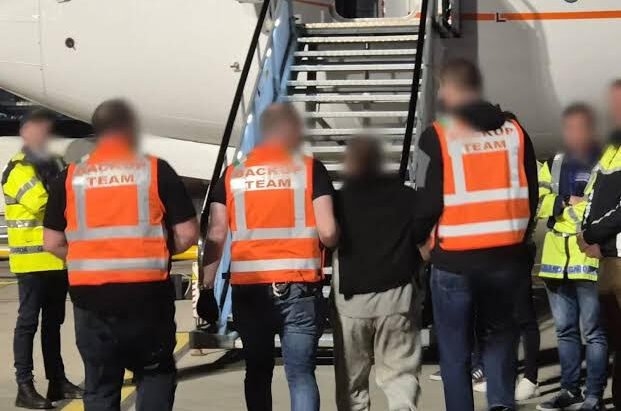
The Irish government has completed the deportation of six Nigerian nationals with a total of 35 criminal convictions, marking a significant enforcement action under its immigration and public safety policies. The operation, carried out on July 28, involved a charter flight that departed from Dublin, transited through Rome, and landed in Lagos, Nigeria, later the same day. All deportees were male, aged between 25 and 40 years, with five of them collectively holding 35 convictions for various offences. This joint effort was coordinated by Frontex, the European Border and Coast Guard Agency, highlighting regional cooperation in managing irregular migration and upholding legal standards.
Minister for Justice, Home Affairs and Migration Jim O’Callaghan confirmed the successful execution of the deportation in an official statement. He emphasized that the individuals were removed from Ireland under active deportation orders, reinforcing the country’s commitment to enforcing immigration laws. The flight left Dublin Airport at 07:40 Irish time and arrived in Rome at 10:34, before continuing on the Frontex-managed return journey to Nigeria, which concluded around 21:00 Irish time. Throughout the process, the deportees were accompanied by members of An Garda Síochána, medical staff, an interpreter, and a human rights observer to ensure compliance with international standards.
The cost of the single charter flight amounted to €76,895 (excluding VAT), reflecting the logistical and administrative resources required for such operations. O’Callaghan stressed that robust enforcement is essential for maintaining public confidence in the immigration system. He stated that individuals involved in criminal activities who pose a threat to society must be held accountable, and deportations are a key tool in achieving this goal. “Our immigration system must be rules-based and robust,” he said, adding that he will take decisive action whenever laws are not upheld.
The minister also praised the professionalism of Irish law enforcement and departmental officials, as well as the collaborative efforts with European partners through Frontex. He noted that further charter operations are planned throughout 2026, indicating a continued focus on removing individuals who have been convicted of crimes and are subject to deportation orders. This latest operation underscores Ireland’s ongoing efforts to balance humanitarian considerations with national security and legal integrity.
As Nigeria receives these deportees, authorities will likely assess their status and potential reintegration challenges. The incident highlights growing international scrutiny on migration management and the increasing role of agencies like Frontex in coordinating cross-border returns. It also serves as a reminder of the complex realities facing countries grappling with illegal immigration and the need for structured, lawful responses.
Leave a Comment