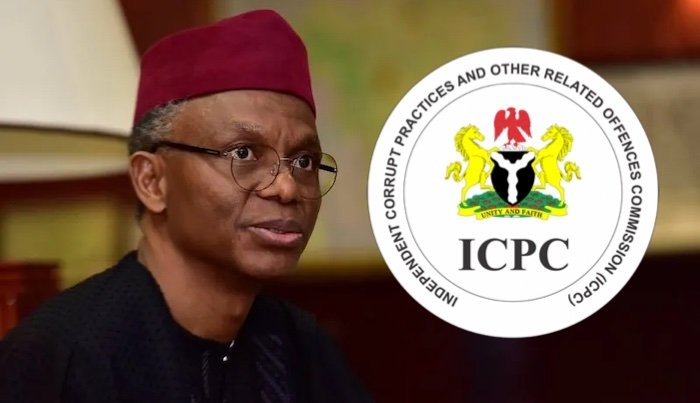
The Independent Corrupt Practices and Other Related Offences Commission (ICPC) has officially rejected a request by the African Democratic Congress (ADC) to visit former Kaduna State Governor Nasir El-Rufai while he remains in the Commission’s custody. In a letter dated May 21, 2026, addressed to the ADC’s National Secretary in Abuja, the ICPC stated that the visitation request could not be granted due to ongoing legal proceedings. El-Rufai is currently facing trial in two courts — the State High Court of Justice and the Federal High Court — both located in Kaduna State. The Commission emphasized that the matter is fully under judicial review, and access to El-Rufai is strictly regulated by court orders.
The ICPC clarified that El-Rufai is in its custody pursuant to court directives, and the Commission is bound by legal procedures to ensure the integrity of the judicial process. According to the letter, only a limited number of individuals have been authorized to visit him. These include members of his immediate family, medical personnel, and legal representatives. The Commission stressed that no other persons, including political party officials or members of the public, are permitted access unless specifically approved by the courts. This restriction is in place to maintain the confidentiality and fairness of the ongoing trials.
The ADC’s request was made in an effort to show solidarity with El-Rufai, who has been a prominent figure in Nigerian politics and has faced multiple allegations of financial misconduct. However, the ICPC maintained that it must uphold the rule of law and respect the boundaries set by the judiciary. The Commission’s decision reflects its commitment to transparency and adherence to legal protocols, even in high-profile cases. It also underscores the importance of allowing the courts to operate without external interference or undue influence.
Despite the denial, the ADC may still pursue other avenues to support El-Rufai, such as advocating for his rights through legal channels or public statements. The Commission’s position remains firm, and it will continue to cooperate with the judiciary while ensuring that custody procedures are followed strictly. The case has drawn significant public attention, given El-Rufai’s stature and the nature of the charges against him. As the trials progress, the ICPC will likely continue to issue updates on access and custody matters.
This development highlights the delicate balance between political advocacy and legal process in Nigeria. The ICPC’s response serves as a reminder that even in politically sensitive cases, legal procedures must be respected. The outcome of the trials will have implications for anti-corruption efforts and public trust in Nigeria’s justice system. As the legal process unfolds, all eyes remain on Kaduna, where the courts will determine the next steps in El-Rufai’s case.


Leave a Comment