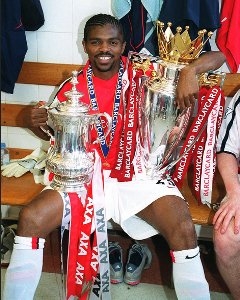
Former Arsenal goalkeeper Alex Manninger has died at the age of 48 following a tragic road accident in Austria, leaving fans and former teammates mourning the loss of a respected figure from the club’s golden era. Manninger, who played alongside Super Eagles legend Nwankwo Kanu during his time at Arsenal, was known for his professionalism and reliability as a backup goalkeeper during the late 1990s and early 2000s. His passing has sparked an outpouring of tributes from across the football world, especially from those who shared the pitch with him at Highbury and beyond.
Manninger joined Arsenal in 1996 and quickly became a trusted presence in the squad, often stepping in as cover for first-choice goalkeeper David Seaman. Though his appearances were limited, his contributions were vital to the team’s depth and success during a period of sustained excellence. He was part of the Arsenal side that won the Premier League and FA Cup double in the 1997/98 season, a campaign that remains one of the most iconic in the club’s history.
During the same era, Nwankwo Kanu arrived at Arsenal in 1999 and quickly became a fan favourite with his flair, intelligence, and clutch performances. His hat-trick against Chelsea in 2002 stands as one of the most memorable moments in Arsenal’s history, helping to solidify his status as one of the club’s greatest African players. The camaraderie between Manninger and Kanu, forged in the dressing room alongside legends like Patrick Vieira, Dennis Bergkamp, and Thierry Henry, helped shape a team that defined Arsenal’s dominance in English football.
After leaving Arsenal in 2001, Manninger continued his career in top European leagues, playing for clubs such as Juventus, Fiorentina, and Udinese. His journey across Italy and beyond showcased his adaptability and enduring talent, earning him respect across the continent. Even after retirement, he remained connected to the game, often sharing insights and memories from his time in the spotlight.
The news of Manninger’s death has brought back memories of a bygone era at Arsenal, a time when the club thrived on unity, skill, and relentless competition. His legacy lives on not just through his achievements on the pitch, but through the bonds he formed with teammates like Kanu, who now pay tribute to a man who played a quiet but essential role in one of football’s most celebrated chapters. As the football community reflects on his life, his impact on Arsenal and European football remains a lasting testament to his dedication and character.





Leave a Comment