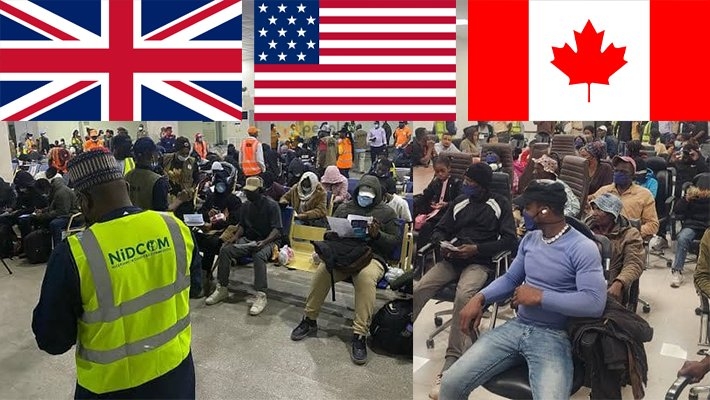
Nigerian deportations from various countries have increased significantly in 2026, with thousands repatriated due to immigration violations, criminal convictions, and failed asylum claims. The trend reflects a global tightening of immigration policies, particularly in Western nations like the United States, Canada, the United Kingdom, Germany, and Ireland, which are now actively removing foreign nationals who breach their laws. Nigeria has become one of the top countries receiving deportees, especially from Canada and Germany, where strict enforcement measures have led to mass removals.
Germany deported 137 Nigerians between February and June 2026, according to data from the Deportees Emergency Reception and Support (DERS) Team and Refugees4Refugees. The deportations occurred in five batches: 27 in February, 37 in March, 24 in April, 23 in May, and 26 in June. This marks a rise compared to previous years, highlighting growing pressure on migration systems in Europe. Critics, including Refugees4Refugees, argue that Nigeria’s weak border controls make it a “deportation clearing house” for black Africans, undermining regional stability.
In Ireland, six Nigerians were deported on July 28, 2026, after being linked to 35 criminal charges. All were male, aged between 25 and 40, and flown first to Rome before connecting to Nigeria. The Irish government spent €76,895 (excluding VAT) on the operation, underscoring the financial burden of deportation. Minister for Migration Colm Brophy called the move “important” in removing individuals involved in criminality from Irish society.
Canada removed 1,674 Nigerians over the past six years, primarily for visa overstays and failed asylum applications. In 2025 alone, 438 were deported, with another 205 sent back in the first half of 2026. By June 2026, the total reached 743, making Nigeria the only African nation among the top 10 countries with the most deportees, according to Canada Border Services Agency (CBSA) data.
Ghana deported 42 Nigerians from the Ashanti Region in December 2025 following convictions for prostitution and other crimes. Meanwhile, the U.S. Department of Homeland Security listed 124 Nigerians as “worst of the worst” criminals, accused of sexual abuse, money laundering, and Yahoo Yahoo fraud. Over 4,000 Nigerians are reportedly incarcerated in U.S. prisons for fraud-related offenses, some of whom were deported to Ghana under a third-country agreement.
The UK signed a migration partnership with Nigeria in March 2026, allowing the use of UK-issued letters in place of Nigerian passports for deportees lacking documentation. This deal is expected to affect thousands of undocumented or convicted Nigerians. In October 2024, the UK removed 44 Nigerians and Ghanaians living illegally.
South Africa saw violent xenophobic attacks against Nigerians in 2026, driven by groups accusing them of drug trafficking. A deadline of June 30, 2026, was set for departure, prompting Nigeria to evacuate 1,490 citizens in a coordinated operation.
Nigeria’s Ministry of Foreign Affairs spokesperson, Kimiebi Ebienfa, emphasized that the government cannot protect citizens who violate host country laws. He stressed that legal consequences must be faced, just as foreigners in Nigeria are dealt with for overstaying visas. He urged Nigerians abroad to respect local regulations and warned that illegal actions will lead to deportation.
As migration patterns evolve, the need for stronger legal compliance and international cooperation becomes more urgent. The rising number of deportations signals a shift toward stricter enforcement, requiring Nigerian migrants to adapt to new realities abroad.




Leave a Comment