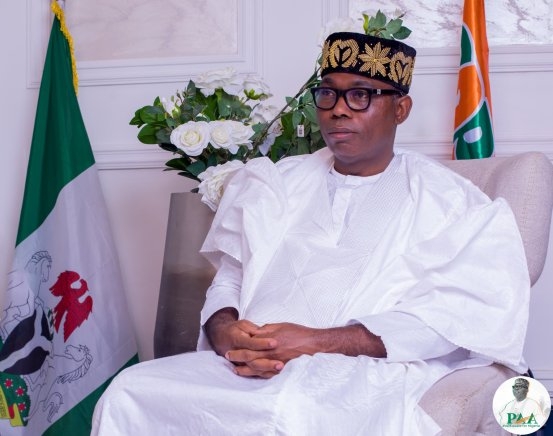
Adewole Adebayo, presidential candidate of the Social Democratic Party (SDP), has publicly stated that President Bola Tinubu does not exhibit the cultural and moral characteristics typically associated with a genuine Yoruba person. Speaking on Channels Television’s Inside Sources on Friday, Adebayo argued that Tinubu falls short of the traditional Yoruba ideal known as “omoluabi,” which emphasizes integrity, humility, and community service. He emphasized that no traditional ruler, Afenifere leader, or religious figure could truthfully claim Tinubu represents authentic Yoruba values in public gatherings.
Adebayo drew comparisons between Tinubu and prominent Yoruba leaders from past eras, including the late Obafemi Awolowo, Ladoke Akintola, and other influential figures from Nigeria’s Second and Third Republics. According to him, these historical leaders set a benchmark for ethical leadership and civic responsibility that Tinubu has not met. “Awolowo has set the standard,” Adebayo said, referencing the revered nationalist and former Premier of the Western Region. He added that if one examines the quality of governance and character among past Yoruba leaders, Tinubu does not measure up.
The SDP candidate stressed that Yoruba people are not tribalistic or nepotistic, contrary to common stereotypes. He maintained that Yorubas do not glorify poor examples of their own to inspire future generations. “No Yoruba person will use a bad example of a Yoruba person to inspire his children,” Adebayo declared, underscoring the cultural expectation for leaders to uphold high moral standards. His remarks come amid ongoing political discourse about identity, representation, and leadership in Nigeria’s diverse society.
By challenging the perception of Tinubu as a quintessential Yoruba leader, Adebayo is positioning himself as a voice for cultural authenticity within Nigerian politics. His comments also reflect broader debates about how ethnic identity intersects with national leadership. While Tinubu remains a dominant figure in Yoruba political circles, Adebayo’s critique highlights growing calls for leaders to embody both competence and cultural virtue.
This statement adds another layer to the 2027 presidential race, where candidates are increasingly being scrutinized not just for policy positions, but for personal character and cultural alignment. As Nigeria continues to grapple with issues of governance and national unity, Adebayo’s remarks may influence voter perceptions across ethnic lines. The debate over what constitutes authentic leadership in Nigeria is likely to intensify in the coming months.
Leave a Comment