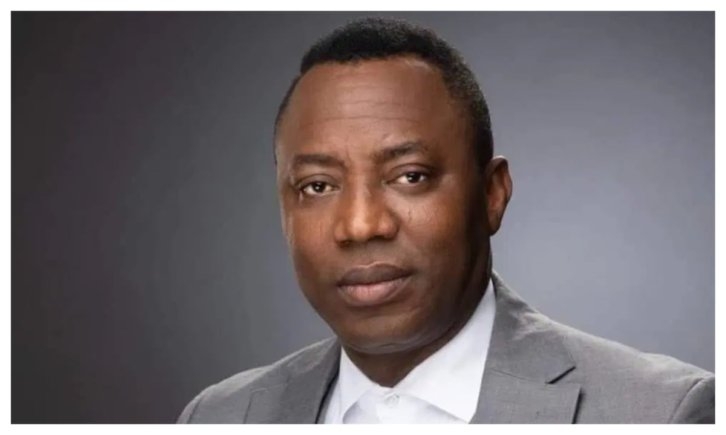
Omoyele Sowore, presidential candidate of the African Action Congress (AAC), has declared that he will abolish the office of the First Lady if elected president in 2027. Speaking on Channels Television’s Politics Tonight on Thursday, Sowore stated that the Nigerian Constitution does not recognize or provide for such a position. He emphasized that while his marriage would remain intact, his wife would not assume any official role as First Lady under his administration.
Sowore argued that maintaining an unofficial position like First Lady amounts to misusing public funds for a role that lacks constitutional backing. He stressed that women’s voices and contributions would still be valued and integrated into his government through formal structures and policies. “Women’s voices will be heard,” he said, “but I don’t think we need a First Lady who is in a position that goes against the constitution and is just spending money that should be used for moving forward and building things.”
He further clarified that his stance is rooted in constitutional principles and fiscal responsibility. According to Sowore, creating or sustaining a role not enshrined in the Constitution undermines governance transparency and accountability. “The Nigerian Constitution does not include a position called First Lady,” he reiterated. “Becoming president won’t end my marriage, but I won’t take on the role of First Lady.” This declaration reflects his broader campaign promise to reform Nigeria’s political institutions and eliminate unnecessary positions that drain public resources.
His comments have sparked discussions across social media and political circles, with supporters praising his commitment to constitutionalism and fiscal prudence. Critics, however, argue that the role of the First Lady, though informal, often supports national development initiatives, especially in areas like health, education, and women’s empowerment. Nevertheless, Sowore maintains that such efforts can be effectively managed through existing government agencies and civil society partnerships without allocating taxpayer money to an unconstituted office.
As Nigeria prepares for the 2027 general elections, Sowore’s pledge adds a distinct dimension to the ongoing debate about governance, gender roles, and institutional reform. His position underscores a growing call among some Nigerians for more transparent and constitutionally grounded leadership. The future of the First Lady’s role in Nigerian politics may now hinge on the outcome of the next election and the vision of the next president.

Leave a Comment