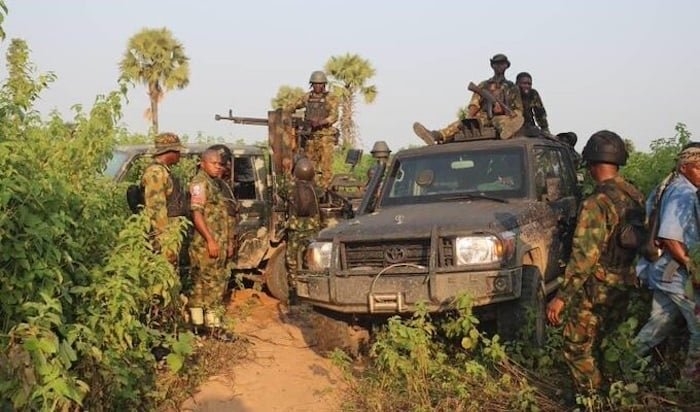
Twenty-five family members of ISWAP terrorists have surrendered to Nigerian military forces in separate incidents across Borno State, marking a significant development amid intensified counter-insurgency operations in the North-East. The surrenders occurred on August 30 and September 2, involving individuals from Marte and Dikwa Local Government Areas, as security forces continue to press their campaign against terrorist enclaves. These developments come as military pressure mounts on insurgent groups, disrupting their networks and prompting internal fractures within their ranks.
On August 30, four individuals handed themselves over to troops of the 3 Battalion, Marine, at Combat Outpost Ladari. They were identified as residents of Arianna, Koloram Yerwa Kura, and Tumbuma communities in Marte Local Government Area. According to Zagazola Makama, a security analyst and counter-insurgency expert in the Lake Chad region, these four were taken into custody by the 24 Military Intelligence Regiment for further investigation and necessary action. Their surrender reflects growing desperation among families caught in the crossfire of ongoing military operations.
In a second incident, 21 family members—comprising seven women and 14 children—surrendered to troops of the 112 Task Force Battalion in Mafa, located in Dikwa Local Government Area, on September 2. Preliminary investigations revealed that this group fled the Yaganari terrorist enclave following violent clashes between rival factions within ISWAP. These internal conflicts have increasingly destabilized the group’s structure, leading to the displacement of non-combatant family members seeking safety with Nigerian forces.
The surrenders highlight both the effectiveness of sustained military operations and the weakening cohesion within terrorist networks. As security agencies intensify efforts to dismantle insurgent strongholds, the psychological and logistical strain on extremist groups is becoming evident. Families who once supported or were affiliated with these groups are now choosing to abandon them, often due to fear, hunger, or internal violence.
Security analysts like Makama emphasize that such surrenders are not isolated events but part of a broader trend. Increased military presence, improved intelligence gathering, and persistent airstrikes have forced insurgents to retreat deeper into remote areas, leaving their families vulnerable. Authorities are expected to screen and process all surrendered individuals according to established protocols, ensuring they receive appropriate care while being assessed for potential threats.
These developments signal a turning point in Nigeria’s fight against terrorism in the North-East. With continued pressure from the military and growing disillusionment within insurgent ranks, more defections and surrenders may follow. The government remains committed to restoring peace and stability to the region, one step at a time.





Leave a Comment