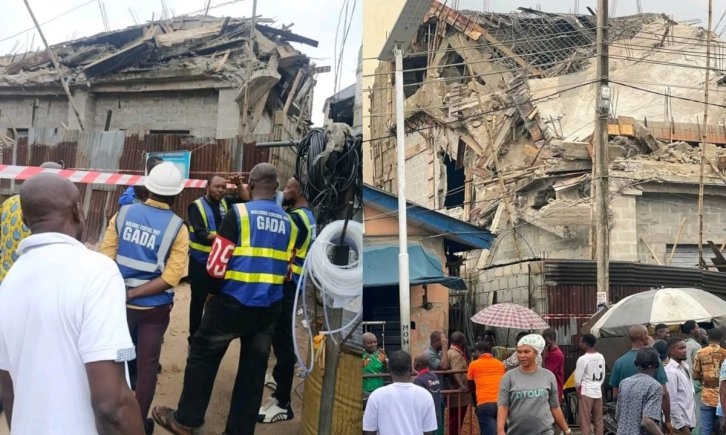
A three-storey building under construction collapsed in Aba, Abia State, on Wednesday morning, sparking widespread alarm among residents and raising fresh concerns over building safety in the region. The incident occurred before site workers arrived for their daily duties, and the structure, which was nearing the roofing stage, had been built for commercial use. Although no casualties were reported, locals have blamed the collapse on poor construction practices and substandard materials, calling for urgent government intervention.
The Greater Aba Development Authority (GADA) swiftly sealed off the collapsed site to prevent unauthorized access and to allow for a thorough investigation into the cause of the structural failure. Officials are expected to assess whether improper design, weak foundations, or inadequate supervision contributed to the incident. Despite public outcry, relevant state agencies have not yet released an official statement confirming or denying the residents’ claims about material quality and workmanship.
This latest collapse adds to a growing list of similar incidents across Abia State between June and August 2026. Records show approximately ten building collapses occurred during that period in Aba, Umuahia, Osisioma Ngwa, and Ikwuano Local Government Areas. On July 17, 2026, two separate buildings—a two-storey and a three-storey structure—collapsed in Finbars Road and Low Cost Housing Estate, both in Umuahia. In the first week of July, a two-storey building under construction gave way in Umugbalu, Ikwuano LGA, while another three-storey building collapsed on July 13, 2026, in Umuozue, Osisioma Ngwa LGA.
In a separate but related development, GADA evacuated residents from a four-storey building on No. 71 Clifford Road, Aba, on July 9, 2026, after severe structural cracks were discovered. The swift evacuation prevented potential loss of life, highlighting the importance of proactive monitoring and enforcement of building regulations. Remarkably, none of the recent collapses—including the latest one in Aba—resulted in fatalities, though the repeated failures continue to threaten public confidence in urban infrastructure.
Residents and community leaders are urging the Abia State government to strengthen oversight of construction projects, enforce stricter compliance with building codes, and hold accountable those responsible for unsafe practices. As investigations into the latest collapse continue, many fear that without decisive action, such incidents may become more frequent. The recurring nature of these collapses underscores the need for sustained regulatory reforms to protect lives and property in Nigeria’s fast-growing urban centres.




Leave a Comment