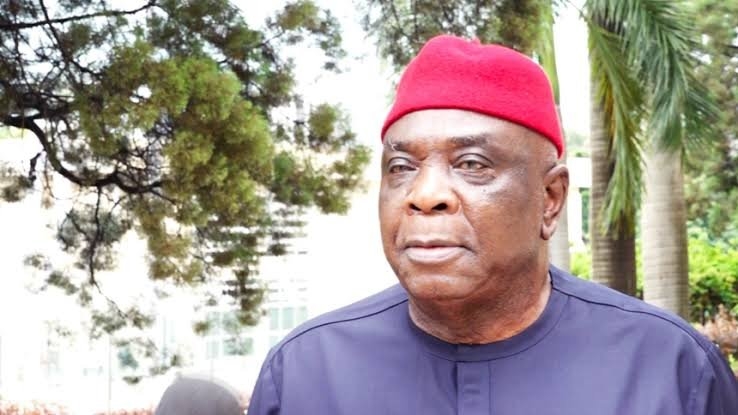
A chieftain of the Peoples Democratic Party (PDP), Dan Ulasi, has publicly criticised the Minister of the Federal Capital Territory, Nyesom Wike, for openly declaring support for President Bola Tinubu ahead of the 2027 general elections. Ulasi argued that Wike’s move, made while still holding a prominent leadership role in the opposition party, undermines party unity and sends a confusing message to PDP members and supporters. Speaking during an interview on ARISE News, Ulasi emphasized that while Wike has the constitutional right as a Nigerian citizen to back any candidate, his public endorsement of the President in his current position is politically inappropriate.
Ulasi pointed out that Wike made his declaration four months prior to the interview, a time when the 2027 elections are still far off. He maintained that such a premature announcement could weaken the morale of PDP members who are expected to mobilize and campaign for their party’s candidate in the coming electoral cycle. “I did say it was wrong for the FCT minister, being the national leader of the PDP, to prematurely declare four months ago for Tinubu, even though he is serving under his government,” Ulasi stated clearly during the interview.
The PDP chieftain suggested that Wike could have waited until the election season was closer before making his political preference known. He stressed that providing reasons and context for supporting Tinubu at that time would have been more appropriate and less damaging to party cohesion. Ulasi acknowledged that no one can legally prevent Wike from supporting the President, but he insisted that doing so while leading the opposition party creates a sense of disloyalty among grassroots members.
This criticism comes amid increasing scrutiny over Wike’s dual role as a senior minister in the Tinubu administration and a key figure within the PDP. His continued presence in government while remaining a party leader has sparked debates about loyalty, political strategy, and the integrity of opposition politics in Nigeria. Some within the PDP see Wike’s actions as a betrayal, while others argue he is navigating a complex political landscape with pragmatism.
As the 2027 elections draw nearer, the tension between party loyalty and individual political choices will likely remain a central issue in Nigerian politics. Ulasi’s remarks highlight the growing pressure on opposition leaders to maintain clear ideological lines, especially when serving in government under a rival administration. The coming months will test how the PDP manages internal dissent and positions itself as a credible alternative to the ruling party.



Leave a Comment