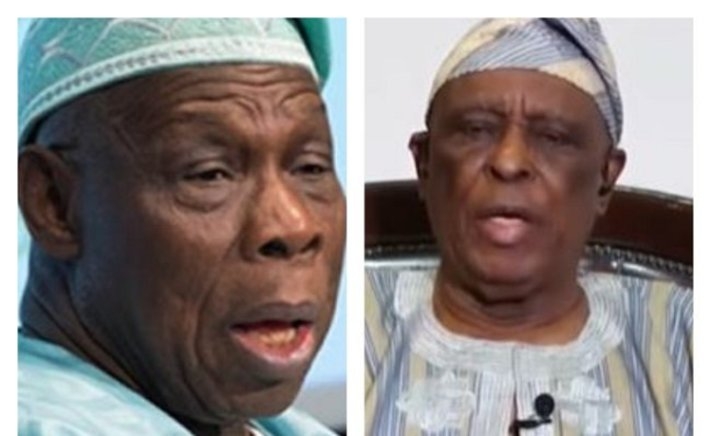
Former Nigerian President Olusegun Obasanjo has firmly rejected allegations by former Ogun State Governor Olusegun Osoba that he deceived South-West leaders in 2003, calling the claims “far-fetched” and riddled with omissions. In a letter dated Thursday, Obasanjo responded to Osoba’s article titled “How Obasanjo Deceived Us in 2003,” published in The Legal Observer on July 20, 2026, expressing strong objection to being labeled deceitful. He emphasized that he never deceived anyone and always presented his positions honestly, regardless of who was affected.
Obasanjo traced his political journey back to 1999, when he was approached by several groups after his release from prison, including one led by the late Chief Bola Ige and another by Martins Kuye. He explained that he undertook nationwide consultations with leaders from the South-West, North, and East before formally joining the Peoples Democratic Party (PDP). These consultations, he said, served as a “sounding board” to gauge public sentiment and assess political dynamics across the country.
In the South-West, Obasanjo met with prominent figures such as Chief Akinloye, Chief Bola Ige, Chief Richard Akinjide, and Professor Oyeleye in Ibadan. In the North, he consulted close friends Sunday Awoniyi and Adamu Ciroma, while in the East, he spoke with Professor Anezi Okoro and Arthur Mbanefo. He noted that these discussions helped shape his decision to join the PDP, which had attracted his attention due to its growing influence and Bola Ige’s active role in its formation.
The former president dismissed Osoba’s assertion that AD governors and Afenifere could dictate to his administration, recalling meetings with Papa Abraham Adesanya and Papa Onasanya. He insisted that bringing the PDP and AD into a national government was a strategic move driven by strength, not weakness, and aimed at national unity and progress. He described Osoba’s portrayal of events as a “gross underrating” of his leadership and political acumen.
Obasanjo also revealed that his then-vice president had initiated efforts to impeach Speaker Ghali Na’Abba and plotted a 2007 takeover with support from AD governors. He claimed the vice president had even given 5 million naira to begin impeachment campaigns. Despite these revelations, Obasanjo maintained that politics should be about ideas and national interest, not personal bitterness or enmity.
He acknowledged Osoba’s contribution to the establishment of the Olusegun Obasanjo Presidential Library (OOPL) in Abeokuta, calling it “the most significant landmark” in the city. Obasanjo concluded by reiterating that political disagreements should not breed hatred, and that national development should remain the ultimate goal. His response underscores the enduring influence of his leadership and the complexities of Nigeria’s political landscape during that era.

Leave a Comment