Six ISWAP Fighters Killed, Seven Wounded as Nigerian Troops Repel Deadly Attack on Borno Base

Six ISWAP Fighters Killed, Seven Wounded as Nigerian Troops Repel Deadly Attack on Borno Base

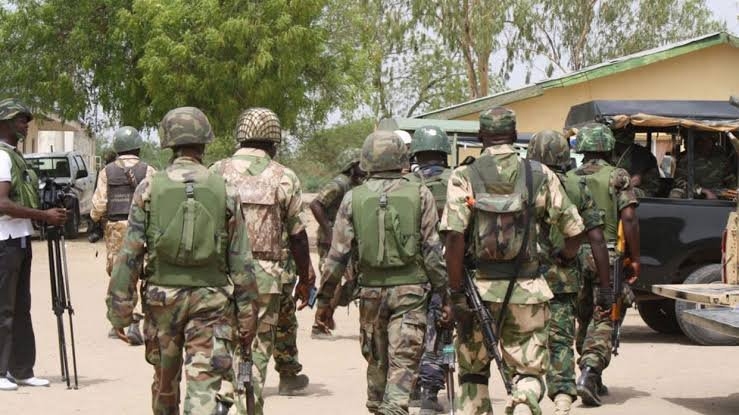
Six Islamic State West Africa Province (ISWAP) fighters were killed and seven others seriously injured in a failed attack on a Forward Operating Base (FOB) at Logomani in Borno State, according to a report by counter-insurgency expert Zagazola Makama. The military repelled the assault in the early hours of July 7, inflicting heavy casualties on the insurgents. The attack was part of ongoing efforts by ISWAP to disrupt military operations in the Lake Chad region, but troops mounted a fierce resistance that forced the terrorists to retreat.

Makama, who closely monitors security developments in the Lake Chad Basin, revealed that intelligence sources indicated the attackers had assembled at Garal before launching their offensive on the FOB. The military’s swift and coordinated response disrupted the attack, leading to significant losses for the insurgents. Survivors were later seen regrouping at Chukun Gudu, where they buried six of their dead, including a senior ISWAP commander identified as Munzir, also known as Ba Alayi.

Ba Alayi, an indigenous resident of Wulgo, was reportedly a key figure within ISWAP’s operational structure in the region. His death marks a significant blow to the group’s leadership and morale, especially as the military continues its sustained clearance operations under Operation HADIN KAI. The operation, launched to dismantle terrorist enclaves and cut off insurgent supply routes, has intensified in recent months across Borno and neighboring states.

The Logomani incident highlights the persistent threat posed by ISWAP despite ongoing military pressure. However, the successful defense of the FOB demonstrates the growing effectiveness of Nigerian troops in countering coordinated attacks. The military’s ability to intercept and respond to such assaults in real time has become a critical factor in reducing the group’s operational capacity.

Security analysts note that the burial of fighters at Chukun Gudu is a common tactic used by ISWAP to mark losses and boost morale among remaining members. Yet, the loss of a senior commander like Munzir could weaken internal cohesion within the group. The Nigerian Army’s continued presence in remote areas like Logomani is seen as a deterrent to further incursions.

As the military presses forward with Operation HADIN KAI, the Lake Chad region remains a focal point for counter-terrorism efforts. The successful repulsion of this attack sends a clear message to insurgents that military bases are well-defended and that any assault will come at a heavy cost. The Nigerian government remains committed to restoring lasting peace and security to the northeast.