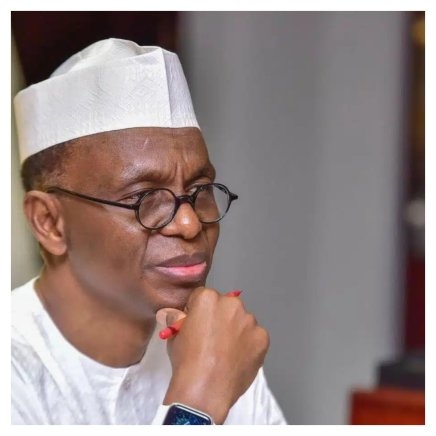
Nasir El-Rufai, the embattled former governor of Kaduna State and a chieftain of the African Democratic Congress (ADC), continues to draw national attention amid his ongoing detention by the Independent Corrupt Practices and Related Offences Commission (ICPC), with political allies praising his resilience and strategic mind. Demola Olarenwaju, Senior Political Assistant to ADC presidential candidate Atiku Abubakar, described El-Rufai as a unique Nigerian politician, highlighting his clear-headedness and tactical approach to governance and politics. Olarenwaju’s comments, shared on X, underscore the growing political discourse surrounding El-Rufai’s prolonged detention, which began on February 19, 2026.
El-Rufai has been held in custody by the ICPC since early 2026, facing allegations of fraud and misuse of office. On April 13, 2026, the commission presented him before a Kaduna High Court with a revised set of nine charges, marking a significant development in the legal proceedings. The trial is currently ongoing, but it has been overshadowed by concerns over El-Rufai’s health and the recent arrest of his personal physician, raising questions about the conditions of his detention and the fairness of the process.
Olarenwaju emphasized that El-Rufai’s political uniqueness lies in his ability to plan strategically and execute with precision, even when others hesitate. “He is not only a planner but if nobody will do the dirties, my man will off his white and enter the mud himself,” Olarenwaju wrote, using a vivid metaphor to describe El-Rufai’s hands-on leadership style. He added that the ICPC will eventually run out of excuses to justify El-Rufai’s continued detention, suggesting that the legal and political pressure will expose what he calls “the nakedness of their hypocrisy.”
The ADC and its supporters have consistently voiced solidarity with El-Rufai, framing his detention as part of a broader political struggle rather than a straightforward legal matter. Olarenwaju’s message carries both admiration and defiance, urging allies to stand firm in the face of what he perceives as unjust treatment. His words reflect a growing sentiment among opposition figures who view El-Rufai’s case as emblematic of the challenges facing Nigerian politicians who challenge the status quo.
As the trial progresses, public and political scrutiny remains intense. The outcome could have significant implications for governance, anti-corruption efforts, and political dynamics in Nigeria. The case continues to spark debate on justice, accountability, and the rule of law, with many watching closely to see how the legal system handles a high-profile figure with deep political ties. The future of El-Rufai’s legal battle will likely shape the narrative around political detention and due process in Nigeria’s evolving democracy.

Leave a Comment