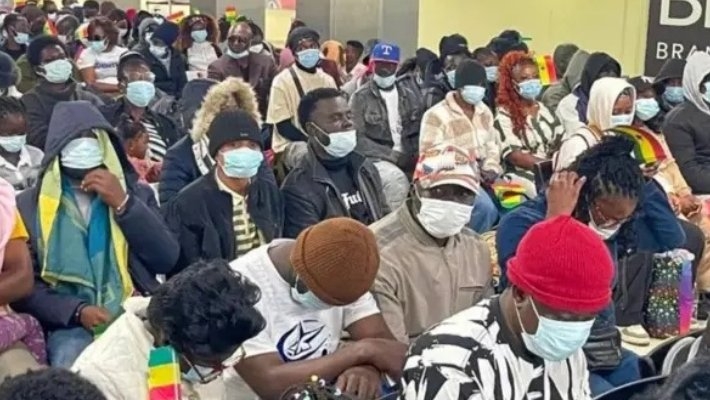
Nigeria’s demand for compensation for nationals who lost property during xenophobic attacks in South Africa has been met with strong resistance from South African authorities, who argue that only legally registered properties are eligible for compensation. South Africa’s Minister in the Presidency, Khumbudzo Ntshavheni, made this clear during a press conference on Friday, stating that individuals must prove legal ownership of any property they claim to have lost. She emphasized that informal settlements and shacks are not recognized as legal property under South African law, and therefore, no compensation can be provided for such structures.
Ntshavheni further questioned the Nigerian government’s claims by asking for specific details about drug dens allegedly operated by Nigerians in South Africa. She said, “We’ll be interested to know where the drug dens of Nigerians are so they can show us where they’ve been holding the drugs so that we can clean the drugs in South Africa quite urgently.” This statement underscores the South African government’s focus on law enforcement and public safety, rather than financial restitution for displaced nationals.
The pushback comes after Nigeria’s Acting High Commissioner to South Africa, Temitope Ajayi, announced that the Nigerian government is actively compiling detailed records of businesses, vehicles, and other assets left behind by citizens forced to flee. Speaking to Channels TV on July 1, Ajayi said he instructed departing Nigerians to document their properties accurately, adding that this information would be used to engage the South African government on compensation. “We will not allow the labour people have suffered to build over the years to just go down the drain or be taken over by others,” he stressed.
Ajayi’s remarks highlight Nigeria’s commitment to protecting the rights and investments of its citizens abroad, especially in the wake of violent xenophobic attacks that have targeted foreign nationals in South Africa. The Nigerian government is determined to ensure that the economic contributions of its diaspora are not erased without accountability. Similar efforts are underway by other African nations, including Ghana and Malawi, which have also evacuated citizens from South Africa amid rising tensions.
The situation reflects a growing diplomatic challenge between Nigeria and South Africa, as both governments navigate the complexities of citizenship, property rights, and national security. While Nigeria seeks justice and restitution for its citizens, South Africa maintains that legal processes must govern such claims. The outcome of these discussions may set a precedent for how African nations handle cross-border property disputes and the protection of diaspora interests in the future.



Leave a Comment