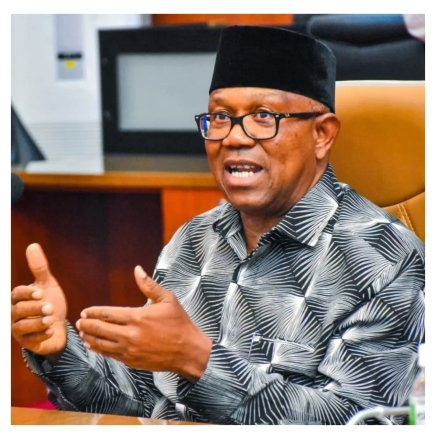
Peter Obi, presidential candidate of the Nigerian Democratic Congress (NDC), has dismissed the significance of state governors’ political support in determining election outcomes, citing his strong performance in the last general election despite lacking any gubernatorial backing. In a recent interview on Noire TV, Obi emphasized that his campaign is centered on improving the lives of ordinary Nigerians, not on securing endorsements from political elites. He pointed to his electoral success in 12 states as proof that grassroots support, not governorship alliances, drives victory.
Obi highlighted that during the previous election, he did not receive the support of a single state governor, yet still managed to win 12 states. He further alleged that two additional states were stolen from him through electoral fraud, meaning he would have secured 14 states if the process had been fair. He referenced the Supreme Court’s ruling that confirmed Abuja as a state, bringing the total number of states to 37, and used this to reinforce his claim of a broader electoral footprint.
He noted that other candidates also won 12 states each — including Senator Rabiu Kwankwaso of the New Nigeria People’s Party (NNPP), who won only Kano State, and the All Progressives Congress (APC), Peoples Democratic Party (PDP), and Labour Party, all of which secured 12 states. Obi’s argument underscores the idea that electoral success is not solely dependent on political machinery or elite alliances, but on the will of the people.
Obi stressed that the upcoming election should not be about who has the most governors on their side, but about how to make Nigeria work for the poor and marginalized. He called for a shift in focus from political patronage to substantive policy and national development. His remarks come at a time when political alliances and governorship endorsements are being heavily promoted by major parties.
The NDC candidate’s message resonates with many Nigerians who have grown disillusioned with traditional political structures and are seeking alternatives. His emphasis on equity, transparency, and grassroots mobilization positions him as a candidate outside the conventional political framework. As the 2027 general election approaches, Obi’s campaign is likely to continue challenging the status quo, urging voters to prioritize national interest over party loyalty or elite endorsements. His past performance and current messaging suggest that he aims to build a broad-based movement focused on accountability and inclusive growth.



Leave a Comment