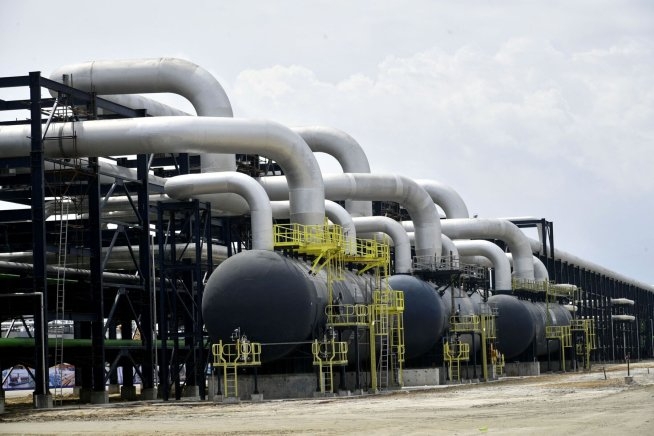
Aliko Dangote has confirmed that Nigerian National Petroleum Company Limited (NNPC) was turned down in its request to acquire additional equity in the $20 billion Dangote Petroleum Refinery, as the company prepares for broader public participation in the future. The decision reflects a strategic move to diversify ownership and involve more Nigerians in the project’s growth, rather than concentrating more shares in a single institution. Dangote emphasized that the refinery’s ownership structure will continue to evolve, aligning with long-term capital market plans aimed at expanding shareholder base and enhancing public engagement.
NNPC currently holds a 7.25 percent stake in the refinery, down from an initial 20 percent participation agreement. The national oil company secured its stake through a $1 billion investment tied to the development of the Lekki-based facility. Although discussions arose about NNPC increasing its equity, the refinery’s management chose to preserve flexibility for future ownership expansion. This approach ensures that the project remains open to a wider range of investors, including individuals and institutions across Nigeria.
The Dangote Petroleum Refinery has become a cornerstone of Nigeria’s downstream petroleum sector, significantly boosting domestic fuel supply and reducing reliance on imported petrol. Industry data from Investors King shows that petrol deliveries from the refinery rose sharply during the first quarter of 2026. At the same time, Nigeria’s dependence on imported fuel declined noticeably, marking a major shift in the country’s energy landscape. The refinery has also capitalized on global energy disruptions caused by geopolitical tensions in the Middle East, opening new export opportunities.
Dangote acknowledged that inconsistent government policies remain a major challenge for large-scale industrial investments across Africa. He stressed that sustainable business growth depends on stable regulatory frameworks and predictable policy environments. Despite these hurdles, he remains confident in the group’s long-term strategy across refining, petrochemicals, cement, and fertiliser operations. Strong export earnings continue to drive foreign currency inflows, supporting the company’s financial resilience.
The refinery’s success has also been bolstered by strategic funding partnerships with major Nigerian and international financial institutions. These collaborations played a crucial role during the construction phase, enabling the project to reach full operational capacity. As the refinery continues to grow, its impact on Nigeria’s economy and energy independence is expected to deepen, positioning it as a key player in Africa’s industrial transformation.




Leave a Comment