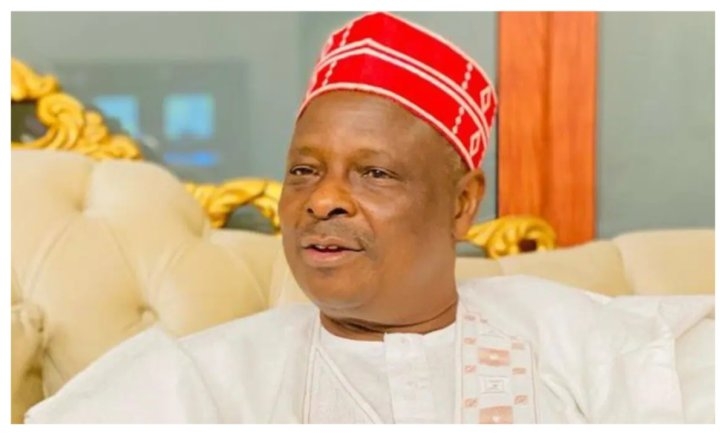
Former presidential candidate of the New Nigerian Peoples Party (NNPP), Rabi’u Kwankwaso, has disclosed that the Nigerian Democratic Congress (NDC) and the African Democratic Congress (ADC) may collaborate ahead of the 2027 general elections. Kwankwaso made the revelation during a live interview on Arise Television’s ‘Prime Time’ programme on Monday. He discussed his recent departure from the ADC and his decision to align with former Labour Party presidential candidate Peter Obi. The development signals a potential shift in political alliances as Nigeria prepares for its next presidential election.
Kwankwaso emphasized that political dynamics in the country are evolving rapidly, particularly among the youth. He noted that while older generations often focus on religion and ethnicity in politics, younger Nigerians are increasingly prioritizing competent and visionary leadership. “People are talking of religion and ethnicity,” Kwankwaso said. “People are talking, especially those at our ages, but the younger people are looking for the right leadership for this country, and I think they are absolutely right.” His comments reflect a growing sentiment among Nigerian youth who seek change beyond traditional political divides.
The possibility of a merger or alliance between the NDC and ADC adds a new layer to the political landscape. Though Kwankwaso has left the ADC, he suggested that cooperation between the two parties could still occur before the 2027 elections. This potential partnership may reshape the opposition front, especially if both parties aim to consolidate their influence against dominant political forces. Kwankwaso’s remarks come at a time when political parties are actively repositioning themselves ahead of the next electoral cycle.
His alliance with Peter Obi, who ran as the Labour Party’s presidential candidate in 2023, highlights a strategic move to build a broader coalition. Obi’s campaign gained significant traction among young voters, and Kwankwaso’s endorsement could strengthen their combined appeal. The two leaders share a vision for economic reform, transparency, and youth empowerment, which resonates with a generation disillusioned by years of mismanagement and corruption.
As Nigeria continues to navigate political uncertainty, Kwankwaso’s comments underscore the importance of unity and strategic partnerships. The 2027 elections may see a more fragmented opposition, but also greater collaboration among parties seeking to challenge the status quo. With the youth increasingly active in political discourse, their influence could determine the direction of Nigeria’s next leadership. The coming years will likely see more realignments as parties and candidates adapt to changing voter expectations.

Leave a Comment