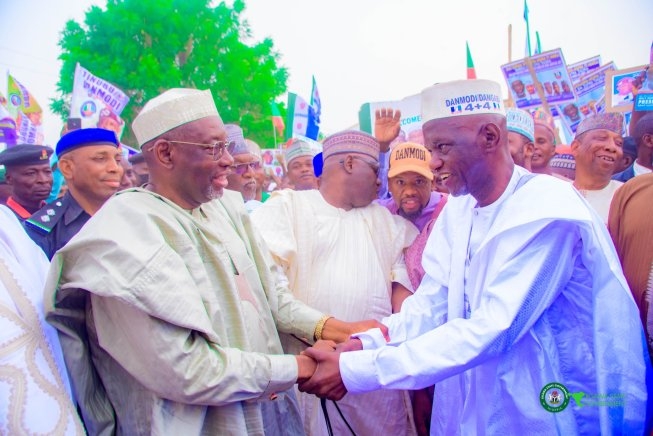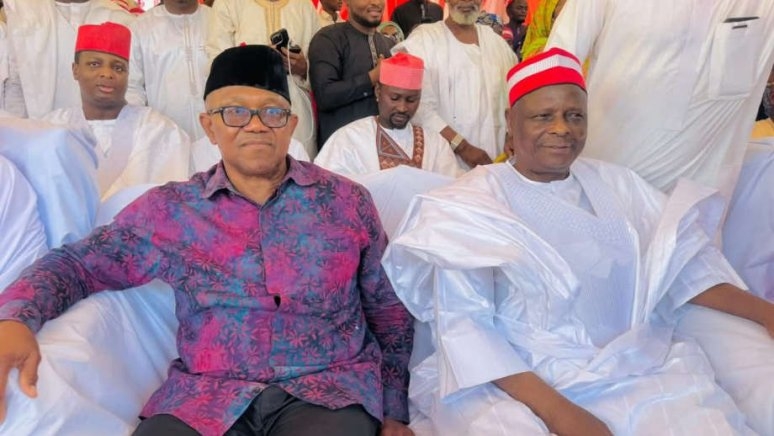
Former Kano State Governor Rabiu Musa Kwankwaso has disclosed that his daughter encouraged him to form a political alliance with former Labour Party presidential candidate Peter Obi during the 2023 general elections. The revelation came during an interview on ARISE News on Monday, where Kwankwaso discussed the shifting political landscape in Nigeria, particularly the growing influence of young Nigerians. He emphasized that younger voters are increasingly prioritizing leadership quality and governance over ethnic or religious affiliations, a trend he believes is reshaping the nation’s political dynamics.
Kwankwaso highlighted that even within his own household, his daughter urged him to collaborate with Obi, reflecting a broader generational shift in political thinking. “Even in the 2023 election, in my own house, my own daughter was telling me to go and work with Peter Obi,” he said. This personal anecdote underscores a wider phenomenon: young Nigerians are challenging traditional political loyalties and pushing for leaders who can deliver tangible solutions to national problems.
The former governor noted that many political leaders remain disconnected from the youth, failing to grasp the impact of social media and digital platforms on political engagement. “You have leaders who hardly have any contact with the young men and women,” Kwankwaso observed. He pointed out that this disconnect is a major weakness in Nigeria’s political system, especially as younger voters become more politically active and vocal.
According to Kwankwaso, the younger generation is demanding credible leadership that focuses on development, transparency, and accountability. “People are talking of religion. Some people are talking of ethnicity, but the younger people are looking for the right leadership for this country. And I think they are absolutely right,” he stated. This sentiment reflects a growing frustration with the status quo and a desire for change driven by youth empowerment.
Kwankwaso’s comments come at a time when Nigeria’s youth population is increasingly influencing electoral outcomes and public discourse. With over 60% of the population under 30, their political preferences carry significant weight. The former governor’s acknowledgment of his daughter’s influence highlights how family dynamics and personal relationships are now part of the broader political conversation.
As Nigeria prepares for future elections, the shift in youth political engagement may redefine party strategies and candidate selection. Political leaders who ignore this trend risk losing relevance. Kwankwaso’s insights suggest that the future of Nigerian politics may lie in embracing youth-led reforms and addressing the real concerns of the next generation.

Leave a Comment