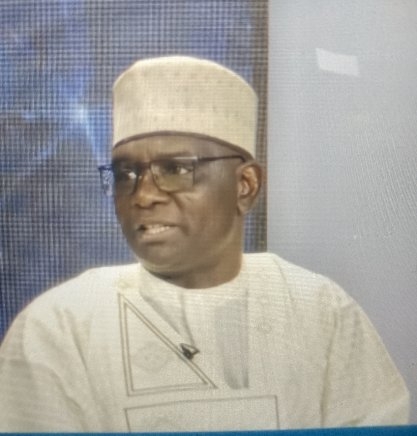
A legal practitioner and public affairs analyst, Buhari Yusuf, has declared that zoning is not democratic, warning that it undermines the core principles of electoral freedom in Nigeria. Speaking as a guest on Trust TV’s interview programme on Monday, Yusuf emphasized that zoning contradicts constitutional values and has been consistently rejected by Nigeria’s legal frameworks since independence. He made the remarks in the context of ongoing discussions about zoning the presidency ahead of the 2025 general elections, a proposal that has sparked national debate.
Yusuf argued that zoning amounts to a temporary suspension of democratic processes, describing it as “a ceasefire in democracy” that only reactivates during election periods. He stressed that such a system does not resolve underlying political tensions but instead escalates them. According to him, zoning restricts voters’ freedom to choose candidates based on merit, competence, or policy, instead forcing them into predetermined regional categories. “You don’t give me an option to choose, then compartmentalize my options along certain geographical lines,” he said, highlighting how this undermines the essence of democracy.
He pointed out that Nigeria’s post-independence constitutions have never endorsed zoning. Specifically, he referenced the 1979 Constitution, widely regarded as one of the most progressive in Nigeria’s history, which explicitly rejected the concept. Yusuf noted that all subsequent constitutional developments, including the 1999 Constitution and its amendments, have maintained this stance. “This concept has been rejected since the creation of Nigeria,” he asserted, underscoring the legal and historical inconsistency of current zoning proposals.
The legal expert further explained that zoning reduces political competition to regional quotas rather than allowing candidates to compete on their own merits. He warned that such practices could deepen ethnic and regional divisions, weakening national unity. Yusuf’s comments come at a time when political parties are increasingly considering zoning as a strategy to ensure equitable representation, especially in a country with diverse ethnic and regional groups.
Despite the growing popularity of zoning as a political tool, Yusuf’s position reaffirms the constitutional and democratic principles that Nigeria was founded upon. His remarks are likely to fuel further discourse on electoral reform and governance in the lead-up to the 2025 elections. As Nigeria prepares for another critical electoral cycle, the debate over zoning will continue to shape political strategies and public opinion.

Leave a Comment