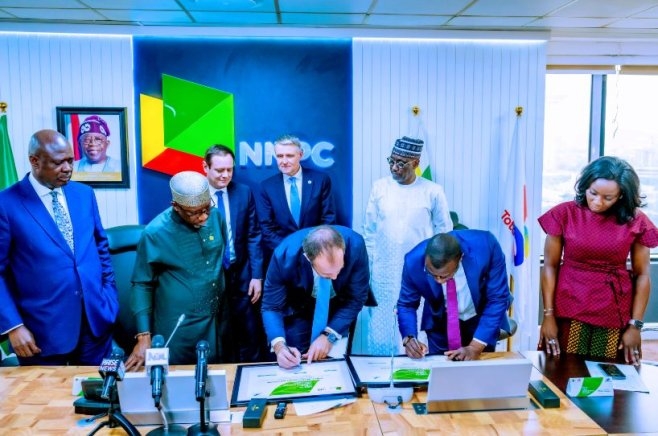
Nigerian National Petroleum Company (NNPC) Limited has launched a strategic initiative to revive Nigeria’s domestic refining capacity through a partnership with two Chinese industrial firms, Sanjiang Chemical Company Limited and Xinganchen Industrial Park Management Co. The agreement, signed in China, is structured as a Technical Equity Partnership, aiming to bring together technical know-how, operational management, and potential capital investment to restore the country’s stalled refineries. This move targets the Port Harcourt and Warri refineries, both of which have remained largely inactive despite billions spent on rehabilitation over the years.
The partnership framework is designed to deliver tangible results by completing outstanding engineering work, installing modern operational systems, and maintaining the refineries to internationally competitive standards. A key focus will be upgrading processing units to meet cleaner fuel specifications and improve product yields, which are critical for reducing Nigeria’s reliance on imported petroleum products. This dependency continues to strain the nation’s foreign exchange reserves, making domestic refining a priority for energy security and economic stability.
Beyond restoring refining operations, the collaboration opens the door to broader industrial development. Plans include expanding petrochemical production and establishing integrated gas-based industrial clusters around the refinery sites. This approach draws inspiration from successful Asian models, where refining facilities are linked to downstream manufacturing and export-oriented industries, creating value chains that boost local economies and generate foreign income.
The initiative comes at a time when Nigeria’s energy sector is undergoing significant transformation. Private sector-led refining projects are increasingly shaping the market, forcing state-owned facilities to meet higher efficiency and cost benchmarks to remain competitive. For NNPC, this partnership represents a shift away from past rehabilitation efforts that yielded limited success. By adopting a performance-driven, technically focused model, the company aims to ensure long-term sustainability and operational excellence.
However, the agreement remains in its preliminary phase, with final terms still under negotiation. Regulatory approvals and detailed project execution plans are pending, and industry experts will closely monitor key milestones such as financing structure, timelines for mechanical completion, and eventual commissioning. The success of this venture will depend on strong execution, transparency, and the partners’ ability to turn framework agreements into functional, productive refineries.
If implemented effectively, this partnership could significantly strengthen Nigeria’s domestic refining capacity, support industrial growth, and enhance national energy security. The outcome will be a test of Nigeria’s ability to attract and manage foreign technical collaboration in critical infrastructure sectors.




Leave a Comment