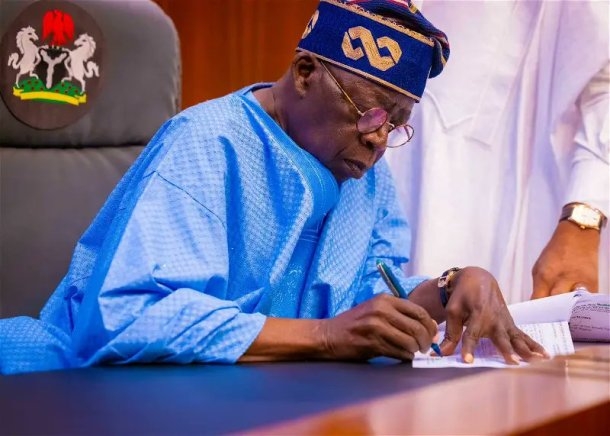
Nigeria’s President Bola Ahmed Tinubu has reportedly removed Finance Minister Wale Edun in a significant cabinet reshuffle that signals a potential recalibration of the country’s economic leadership amid ongoing fiscal and monetary reforms. The move, if confirmed, would mark one of the most substantial changes in the Federal Executive Council since the administration began its sweeping economic agenda. Taiwo Oyedele, a prominent figure in Nigeria’s fiscal policy reform framework, is expected to take over the key economic management role, according to emerging reports.
The timing of the reported shake-up is critical, as Nigeria continues to face mounting economic challenges. Inflation remains elevated, the exchange rate is volatile, and the cost of living continues to strain households across the country. At the same time, the government is pushing forward with fiscal and tax reforms aimed at improving revenue generation and reducing dependence on oil. Edun, who has been a central figure in the administration’s economic strategy, played a pivotal role in key decisions such as the removal of fuel subsidies and the liberalisation of the exchange rate. His reported exit may indicate a shift in approach or a strategic reorganisation to enhance implementation.
Taiwo Oyedele’s background positions him as a strong candidate for the new role. As Chairman of the Presidential Fiscal Policy and Tax Reforms Committee, he led efforts to simplify Nigeria’s complex tax system, improve revenue mobilisation, and enhance fiscal transparency. His leadership in these areas suggests that the government may be placing greater emphasis on structural fiscal adjustments and tax reform in the coming months. If confirmed, Oyedele’s appointment would reflect a deeper commitment to long-term economic stability through policy-driven revenue growth.
A change in leadership at the finance ministry carries significant implications for investor confidence, foreign capital inflows, fiscal policy direction, and exchange rate expectations. Markets often react to such changes based on perceived policy continuity, the credibility of the incoming leadership, and the speed with which reforms are executed. Investors and analysts will be closely watching for signals on whether the new leadership will maintain the current reform trajectory or introduce new priorities.
The reported removal of Wale Edun and the elevation of Taiwo Oyedele could represent a major inflection point in Nigeria’s economic management. As the country navigates a difficult economic landscape, the success of the new leadership will be measured by their ability to deliver sustainable reforms and restore public and investor confidence. The coming weeks will reveal whether this reshuffle marks a strategic pivot or a continuation of the existing economic roadmap.




Leave a Comment