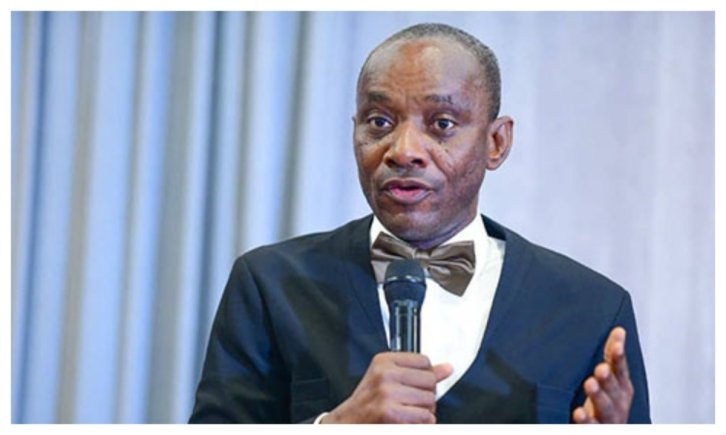
The internal political crisis in the African Democratic Congress (ADC) has been described as self-inflicted by Sam Amadi, Director of the Abuja School of Social and Political Thought, following the party’s recent leadership turmoil. Amadi made the statement during a live interview on Arise Television on Monday, just one day after prominent figures Peter Obi and Rabi’u Kwankwaso announced their exit from the ADC to join the Nigerian Democratic Congress (NDC). The departure of these key leaders has intensified scrutiny on the ADC’s governance structure and internal decision-making processes.
Amadi highlighted that concerns over the ADC’s formation had been raised from the outset, pointing to unresolved foundational issues such as zoning, consensus-building, and the conduct of direct primaries. He emphasized that the party’s failure to address these matters decisively has contributed significantly to its current instability. “Many people have expressed concern about the formation of the ADC,” he noted, underscoring that the party’s leadership has not provided clear direction on critical governance principles.
According to Amadi, the ADC is now weakened at a time when it should be strongest, particularly as it seeks to position itself as a credible alternative in Nigeria’s political landscape. He argued that the lack of clarity on core issues has eroded trust among members and potential allies. “The ADC crisis is self-inflicted,” he stated firmly, adding that the absence of a coherent framework for leadership selection and internal democracy has created fertile ground for dissent.
The ADC, formed in 2023 as a coalition of opposition forces, was expected to consolidate opposition voices and challenge the dominance of the ruling All Progressives Congress (APC) and the main opposition Peoples Democratic Party (PDP). However, the party’s inability to manage internal disagreements has led to a leadership vacuum and public disillusionment. The exit of Peter Obi, a former presidential candidate and influential figure in Nigerian politics, and Rabi’u Kwankwaso, a former governor of Kano State and respected political leader, marks a major blow to the ADC’s credibility and influence.
Amadi’s remarks come amid growing speculation about the future of the ADC and its ability to remain a viable political force. Analysts suggest that without urgent reforms and transparent leadership structures, the party may struggle to regain momentum. The broader political environment in Nigeria remains highly competitive, with multiple parties vying for relevance ahead of upcoming elections.
As the ADC grapples with its internal challenges, the broader implications for Nigeria’s democratic landscape remain significant. The party’s ability to resolve its crisis will be closely watched by voters, political observers, and potential allies. The next steps taken by the ADC leadership will determine whether it can recover or fade into irrelevance.




Leave a Comment