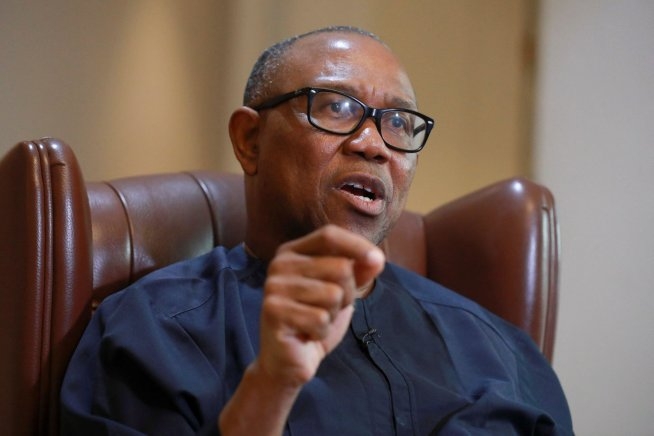
He criticized the government for prioritizing political schemes over public safety, saying that democratic processes are being undermined by leaders more concerned with power than protection. “There is a glaring absence of effective governance; instead, what prevails are schemes that undermine democratic processes, as though politics has taken precedence over the safety of citizens,” Obi said. He warned that the U.S. decision reflects a loss of trust in Nigeria’s national security framework.
Obi also referenced the recent killing of a senior military officer in Borno State, a Brigadier General, by suspected Boko Haram terrorists. “Disturbingly, reports indicate the loss of yet another Army Brigadier General to terrorists in Borno earlier today,” he said. He stressed that a nation where people cannot live, work, worship, or travel safely cannot progress or attract investment.
He underscored that the primary responsibility of any government is to protect lives and property, yet he argued that Nigerian leaders have consistently failed in this duty. “Our failure continues to place immense strain on our troops, who make the ultimate sacrifices,” he added. Obi lamented that while the country deteriorates, leaders remain preoccupied with politics, ignoring the foundational need for security. “Sadly, as Nigeria deteriorates, we as leaders, like Nero, remain preoccupied with politics, forgetting that without security, there is no nation to govern and no future to campaign for,” he concluded.
The U.S. advisory, which comes amid increasing violence across the North-East and other regions, underscores growing international concern over Nigeria’s security landscape. Obi’s comments echo broader calls for urgent reforms and a renewed focus on national safety. As the country faces mounting challenges, the need for decisive leadership and effective security strategies becomes more critical than ever.


Leave a Comment