
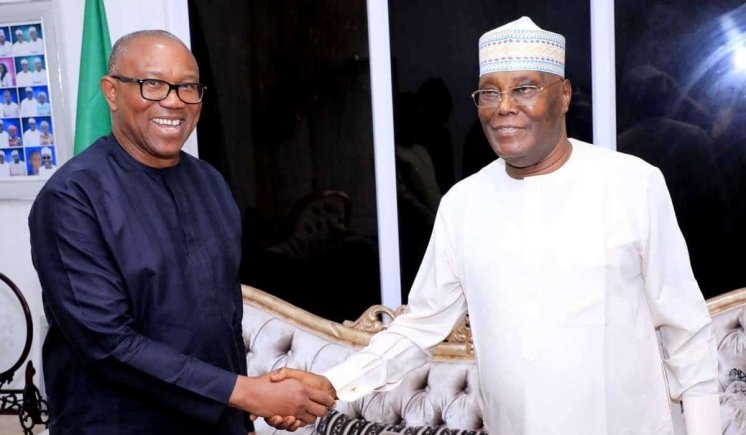
Leading opposition figures in Nigeria are reportedly considering abandoning the African Democratic Congress (ADC) as their political platform ahead of the 2027 general elections, amid a deepening leadership crisis that has left the party in legal and administrative limbo. Former Vice President Atiku Abubakar, former Labour Party presidential candidate Peter Obi, and former Kano State Governor Rabiu Kwankwaso are among those holding high-level discussions on the party’s future. The crisis intensified after the Independent National Electoral Commission (INEC) suspended recognition of all factions of the ADC’s leadership, citing a Court of Appeal ruling and ongoing litigation over the party’s internal structure. This decision has cast serious doubt on the party’s ability to field candidates for presidential, governorship, and legislative elections in 2027.
Political insiders speaking with The Guardian warn that the unresolved leadership dispute could derail the ADC’s electoral participation entirely. Any conventions or congresses held under the disputed factions may be declared invalid if INEC does not restore recognition. Sources indicate that the legal battle may extend beyond the party primaries and the submission of party registers, leaving candidates and members in a precarious position. One insider cautioned, “If this crisis continues and members contest under the ADC, and the party eventually loses recognition, they cannot simply defect to another party afterward.” This highlights the urgency and risk involved in the current political uncertainty.
In response, opposition leaders are reportedly holding emergency consultations, with a series of meetings expected in Abuja after the Easter period. These discussions aim to map out a strategic political path forward, including the possibility of adopting alternative platforms. Among the parties under consideration is the Action People’s Party (APP), which has maintained structural stability since its formation and currently holds seats in the National Assembly, including those occupied by Ikenga Ugochinyere and Matthew Nwaogu. Another option is the New Democratic Congress (NDC), a newer party championed by former Bayelsa State Governor Seriake Dickson. Although the NDC has limited parliamentary representation, it is seen as free from internal leadership conflicts, making it an attractive alternative.
Opposition leaders are proceeding cautiously, with sources indicating that any decision to switch platforms will likely remain confidential until finalised. This strategy is designed to avoid alerting the ruling All Progressives Congress (APC) prematurely. The consultations reflect broader political realignments taking place among opposition figures as they prepare for the next general elections. The outcome of these discussions could significantly reshape Nigeria’s political landscape in the coming years, as key leaders seek to consolidate their influence under a viable and recognised platform.

Leave a Comment