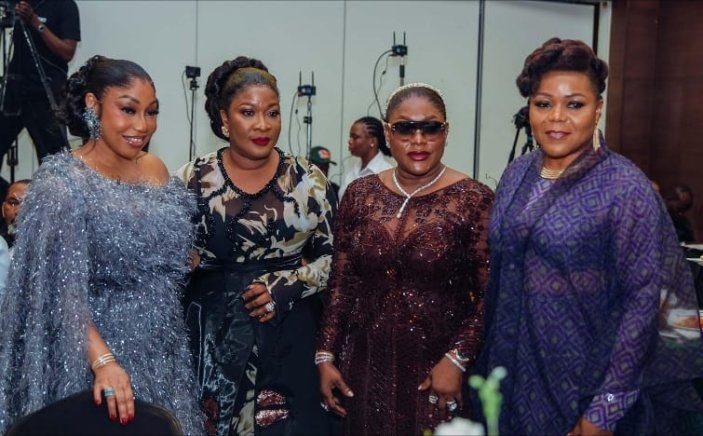
The Miss Nigeria Beauty and Fashion Fair, held at the Eko Hotel Grand Ballroom in Lagos, brought together key players in Nigeria’s fashion and beauty industry for a two-day event aimed at positioning the sector as a major engine of economic growth. The gathering, which featured exhibitions, policy dialogues, and enterprise-focused discussions, marked a shift from traditional showcases to a more business-oriented platform. Industry leaders, entrepreneurs, policymakers, and creatives came together to explore how fashion and beauty can be leveraged for sustainable development and national economic transformation.
Lagos State Commissioner for Tourism, Arts and Culture, Toke Benson-Awoyinka, praised the rising standards in the sector and reaffirmed the state government’s commitment to supporting fashion and beauty as key drivers of tourism and job creation. She encouraged women entrepreneurs to expand their reach and explore opportunities across the entire value chain, from design and production to marketing and export. Her remarks underscored the growing recognition of the sector’s potential beyond aesthetics to become a formalized economic force.
A standout moment came during the keynote address by Onyinye Ikenna-Emeka, Chief Marketing Officer of MTN Nigeria, who emphasized the importance of systems in building lasting businesses. “Most people don’t fail because they lack talent, but because systems were not designed to help them thrive,” she said. She highlighted that women entrepreneurs are creating value and need partnerships, market access, finance, and visibility to scale their ventures. Her message resonated with the event’s central theme: the convergence of creativity, infrastructure, and collaboration in driving sectoral growth.
Miss Nigeria Patron Aisha Achimogu described the platform as one rooted in legacy and intentional development, while 45th Miss Nigeria Queen Doris Ogah urged young women to embrace ambition and visibility. “Do not shrink yourself. Show up for what you believe in, even when it feels uncomfortable,” Ogah said, as she announced the launch of the next national pageant. The runway showcased bold collections from emerging designers, culminating in the announcement of the Young Designer of the Year, a recognition linked to the legacy of the Daily Times fashion competition.
The second day focused on enterprise development and scalability. Lynda Saint-Nwafor opened the session by calling the platform a gateway to economic transformation. “This is where beauty becomes business and ideas become legacies,” she said. Panel discussions featuring industry experts like Laura Ikeji Kanu, Lanre Da Silva, Njideka Jack, Chioma Okigbo, and Uche Onwuka explored challenges in entrepreneurship, funding, and scaling. Njideka Jack stressed that passion alone is not enough, urging businesses to adopt structure and data-driven decision-making. “If you don’t track your numbers, you can’t scale,” she warned.
Onwuka highlighted the connection between credibility and access to capital, revealing a ₦1 billion matching fund initiative with MTN to support women-led enterprises. Participants consistently emphasized that long-term growth in the fashion and beauty sector depends on discipline, knowledge, and sustainable systems. By the end of the fair, stakeholders agreed that the event had evolved beyond celebration to become a strategic platform where fashion meets finance, and beauty is recognized as a structured, scalable economic force. The future of Nigeria’s fashion and beauty industry now lies in innovation, collaboration, and measurable impact.





Leave a Comment