
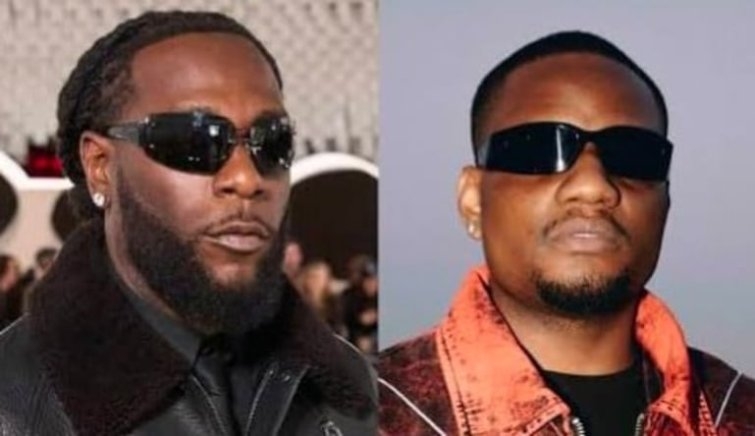
Grammy Award-winning Nigerian singer Damini Ogulu, popularly known as Burna Boy, has firmly denied claims that he was backed by 10 men during a physical altercation with DJ Tunez, a prominent Nigerian disc jockey. The incident, which occurred recently and was captured on video, sparked intense reactions across social media platforms. Both DJ Tunez and his boss, Wizkid, took to social media to accuse Burna Boy of attacking him with the help of a group of men. DJ Tunez claimed he was struck from behind without warning, calling the act “some sucka sht,” and emphasized that he defended himself despite being outnumbered.
In a post on his social media, DJ Tunez wrote, “This N*gga Burna Boy, all signs of weakness. First off, you hit me in the back of my head without me looking, that’s some sucka sht, my boy.” He further stated, “1 vs 10, and I stood my ground. That’s why you collected as well, when I defended myself.” These statements fueled public speculation and debate, with many fans and followers weighing in on the incident. The video of the confrontation quickly went viral, drawing attention from media outlets and entertainment enthusiasts across Nigeria and the diaspora.
However, Burna Boy addressed the allegations directly during a livestream session with fellow artist Shallipopi on Wednesday night. In the live session, he admitted to slapping DJ Tunez twice but categorically denied being backed by any group. He emphasized his innocence with strong words, saying, “Shalli, no be 10 people touch that guy, na only me. I swear with my mama. If I dey lie, make Ogun carry my mama go anywhere wey Wizkid mama dey. Na only me two slap na im I give am.” His statement was clear and direct, aimed at dispelling the narrative that he had an army of supporters during the incident.
Burna Boy’s denial has added a new layer to the ongoing controversy, with fans now divided over who is telling the truth. The incident has also reignited discussions about conduct in the Nigerian music industry, especially regarding public confrontations between artists. Despite the heated exchange, no official legal action has been reported as of now. The situation remains under public scrutiny, with many awaiting further developments or official statements from involved parties.
As the story continues to unfold, it underscores the importance of verified information in the digital age, especially when high-profile personalities are involved. The incident serves as a reminder of how quickly social media can amplify conflicts, often without full context. The music industry in Nigeria continues to navigate these challenges, balancing fame, public image, and personal conduct. What happens next could influence how future disputes among artists are handled both online and offline.


Leave a Comment