
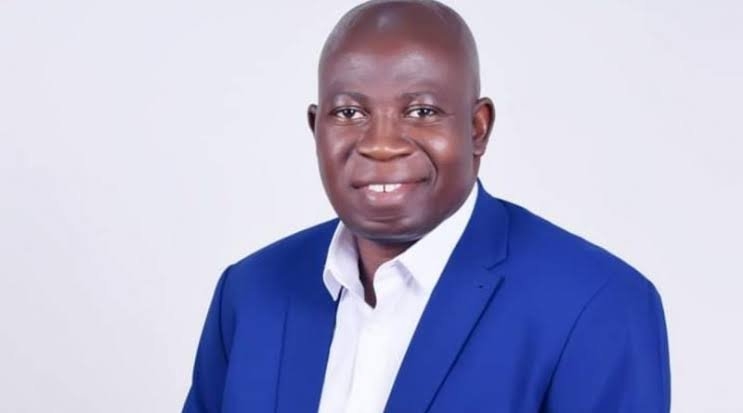
Political editor, Sumner Sambo, has urged political stakeholders in the African Democratic Congress (ADC) to consider switching to another political platform, citing significant internal challenges and disputes within the party. This advice was shared during an interview on Arise News’ “The Morning Show” on Monday.
Sambo highlighted ongoing issues within the ADC, including质疑the legitimacy of its leadership and several legal cases challenging the party’s executive structure. He warned that these problems could hinder the ADC’s ability to function effectively as a coalition vehicle for opposition stakeholders. “The problems are numerous,” Sambo said, emphasizing that ADC is currently burdened by legal and structural challenges that could impact its future viability.
While acknowledging that the ruling All Progressives Congress (APC) may benefit from the opposition’s disarray, Sambo noted that the ADC’s issues are largely self-inflicted. He explained, “I think if they have very good strategies, they will start thinking of looking for another political party to adopt at the moment.”
Among the specific issues he highlighted were disputes surrounding the leadership of ADC, particularly challenges to the legitimacy of Nafi Bala Gombe and others. Sambo revealed that he had a recent conversation with someone well acquainted with the ADC, who mentioned additional cases undermining the party’s structure. “There’s another case which actually claims that even Ralph Nwosu was an illegal or illegitimate executive,” Sambo noted.
Despite the ADC’s appeal, especially due to its alphabetical order, Sambo noted a historical precedent: when the APC was formed in 2013, it adopted a similar strategy to elevate its party’s name. However, Sambo advised opposition stakeholders against rushing into supporting the ADC due to its current problems. “The ADC is entangled with so much problems, and it could be a challenge, and it is not the fault of the APC,” he explained.
Sambo was forthright, suggesting that while the APC may benefit from outsiders focusing on the ADC’s challenges, the ADC’s leadership is aware of many of these issues. He cited Tilde Mallam Nasir El-Rufai’s comments during the ADC’s formation, implying that leaders within the coalition had alternative plans. “They already had another party,” Sambo recalled.
Additionally, Sambo mentioned rumors that opposition stakeholders have explored adopting the Nigerian Democratic Congress (NDC), a party owned by Seriake Dickson. However, he advised caution, noting that some of these parties were registered by an act of court. “They should also be very careful, because if they do approach some of those parties, somebody may go back and challenge or appeal some of those cases that led to the registration of these parties by INEC,” he cautioned.
Sambo concluded by reflecting on the quality of Nigeria’s political processes, questioning whether this level of legal and structural uncertainty is desirable. “It is interesting to wonder where our political systems are headed, given these challenges,” he remarked.
As political parties navigate the upcoming election season, Sambo’s warning underscores the importance of sound strategic decisions, particularly in light of the ADC’s current difficulties. The future of politicalcoalitions and alliances in Nigeria will largely depend on how stakeholders handle these ongoing challenges and whether they chart a new course to ensure stability and progress.


Leave a Comment