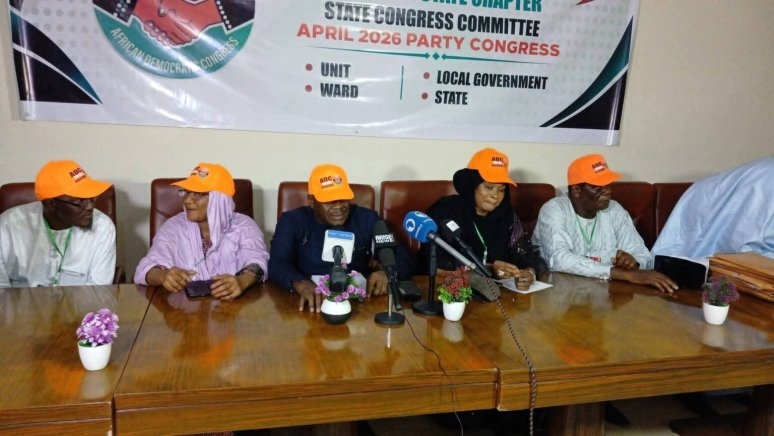
The African Democratic Congress (ADC) in Adamawa State has seen a major political shift as members loyal to former Secretary to the Government of the Federation, Babachir Lawal, swept to victory in state, local government, and ward congresses held over the weekend. Despite a court order suspending the elections, the congresses proceeded, resulting in the election of a new state executive council. The leadership change comes amid deep factionalism within the party, primarily between the Babachir Lawal faction and supporters of former Vice President Atiku Abubakar.
Sadiq Ibrahim Dasin, a legal practitioner, was elected as the new State Chairman of the ADC in Adamawa, leading the newly formed executive council. The election was conducted in defiance of a High Court order issued in Yola, which had directed the suspension of the congresses. The court’s decision followed a petition by Yohana Shehu, the incumbent state chairman aligned with Atiku Abubakar’s camp, who argued that the committee tasked with organising the congresses had not consulted him or his executive team.
Organisers of the congresses claimed they were unaware of the court’s directive, allowing the elections to go ahead. The newly elected state executive includes Muhammad Arabi Mustapha as State Organising Secretary and Muhammad Umar U.J. Jada as State Youth Leader. Other key positions were filled by Hyellagiziya Fakuta Naiwa as Treasurer, Mohammed Alhaji Adamu as Assistant Financial Secretary, and Teneke Atimo Medan as State Assistant Youth Leader (South).
Anas Muhammad (Yawudima) was elected Deputy Youth Leader, while Hon. Rahab Nyayeba Audi became the Woman Leader. Sani Hassan was appointed Deputy Chief Whip, and Zainab Abubakar was named Deputy Women Leader. The election results have intensified internal tensions within the ADC, as both factions now claim legitimacy over the party’s leadership in Adamawa.
The legal and political battle between the Lawal and Atiku camps is not new, but the recent developments mark a significant escalation. The outcome of these congresses could influence the party’s direction in the state and its performance in upcoming elections. As the ADC prepares for future political engagements, the leadership dispute may continue to shape its internal dynamics and public image.
The new leadership’s ability to unify the party and deliver on its mandate will be closely watched. This development underscores the ongoing challenges of party cohesion in Nigeria’s political landscape, especially in states like Adamawa where factionalism has long been a defining feature.



Leave a Comment