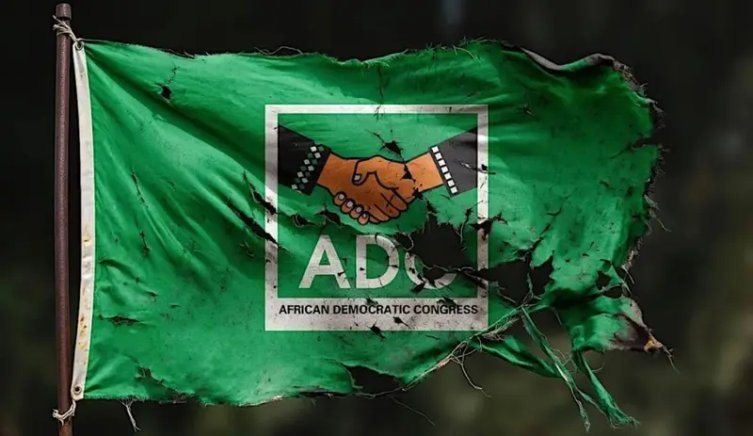
Nafiu Bala, a factional national chairman of the African Democratic Congress (ADC), has confirmed his attendance at a July 2025 meeting where the party’s interim leadership, headed by former Senate President David Mark, was installed, sparking a deepening internal crisis that has split the party into two rival factions. The development has drawn scrutiny from the Independent National Electoral Commission (INEC) and the judiciary, with both refusing to recognize either group as the legitimate leadership. Bala’s recent clarification, released on Tuesday, comes amid growing public and political debate over the legality and constitutionality of the leadership transition.
Videos of Bala at the July 2025 meeting began circulating widely on social media on Monday, reigniting discussions about the legitimacy of the interim leadership. In his statement, Bala denied that any formal agreement was reached during the session to appoint David Mark as interim chairman. He explained that the meeting was convened after former National Chairman Chief Ralph Okey Nwosu unexpectedly announced his resignation and immediately handed over membership cards to Senator David Mark and Rauf Aregbesola, naming them Acting National Chairman and National Secretary, respectively.
Bala emphasized that Nwosu’s actions violated key provisions of the ADC’s 2022 constitution, particularly Articles 8(2) and 9(4), which prohibit an outgoing chairman from appointing a successor. He argued that such a move was unconstitutional and undermined the party’s internal governance structure. The sudden resignation and appointment created confusion and led to the emergence of two competing leadership structures—one led by Mark and the other by Bala himself.
The Court of Appeal ruled on March 12 that it would not validate either faction, reinforcing INEC’s decision not to recognize either group as the legitimate leadership. This judicial and electoral stance has left the ADC in a state of limbo, with both factions continuing to operate independently and claiming to represent the party’s true leadership. The internal rift has caused tension among party members, disrupted campaign activities, and raised concerns about the party’s ability to function effectively in upcoming elections.
As the ADC grapples with its leadership crisis, political observers are closely watching how the party will resolve its internal divisions. The situation underscores the importance of constitutional adherence and transparent leadership transitions in Nigerian political parties. The future of the ADC will likely depend on whether the factions can reach a peaceful resolution or if the party will continue to face fragmentation and electoral marginalization.



Leave a Comment