
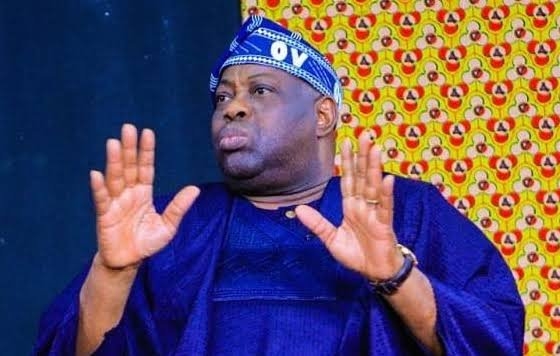
African Democratic Congress (ADC) leader Dele Momodu has accused the All Progressives Congress (APC) of grossly underestimating the ability of former presidential candidates — Peter Obi, Atiku Abubakar, and Rabiu Kwankwaso — to unite in preparation for the 2027 election. During an interview with ARISE Television on Monday, Momodu made this claim amid discussions about the Independent National Electoral Commission (INEC) approving factions within the ADC. Momodu argued that the current administration has consistently worked to weaken opposition parties to ensure its dominance in the electoral process.
According to Momodu, the APC initially believed that rival ex-presidential candidates would never collaborate, allowing for a divided opposition. However, he asserted that their arrogance led the APC to miscalculate, as the former candidates have since aligned to present a formidable challenge. He criticized the incumbent government for its early focus on securing power beyond 2023, alleging that state machinery was deployed to sabotage democratic movements and destabilize opposition parties.
Momodu revealed that the APC had distanced itself from the ADC, assuming that Obi, Atiku, and Kwankwaso would not unite. However, “If you look at the trajectory since this administration came to power, you’ll see they didn’t want any opposition. They started fighting for the next election immediately and installed enablers to get their jobs done,” Momodu said. He added that the APC initially left the ADC alone, “hoping that Peter Obi, Atiku Abubakar, and Kwankwaso would never work together. It was a miscalculation.”
Momodu went further to accuse top government officials of manipulating the judiciary and exploiting poverty to impose a one-party state or single leadership. He linked this to INEC’s handling of the ADC’s internal leadership dispute, saying, “Top government functionaries are pouring resources into the judiciary, and it has become part of a larger strategy. They weaponize poverty, reducing people to needing rice handouts. It’s scandalous that they want to turn Nigeria into a one-party state or a one-man rule, but it won’t work.”
Momodu also criticized INEC for overstepping its mandate by making controversial decisions in the ADC’s internal matter, particularly when it came to approving the faction led by Rabiu Kwankwaso. He warned, “INEC faltered by acting as a judge in the case. If they were unsure of the truth, they should have referred it to court instead of making pronouncements. If the APC were involved, INEC would never have handled it this way. A judge should not decide in their own cause. INEC is responding to undue pressure rather than court orders. This pressure intensified after the declaration of Dr. Kwankwaso.”
Momodu’s comments highlight the ongoing tensions within Nigerian politics as opposition parties continue to unite while the ruling APC remains under scrutiny over its perceived attempts to suppress dissent. As the 2027 election looms, these themes are likely to remain at the forefront, with Momodu’s statements serving as a stark warning about the state of democracy and the integrity of electoral processes, emphasizing that efforts to impose autocratic rule will ultimately fail.




Leave a Comment