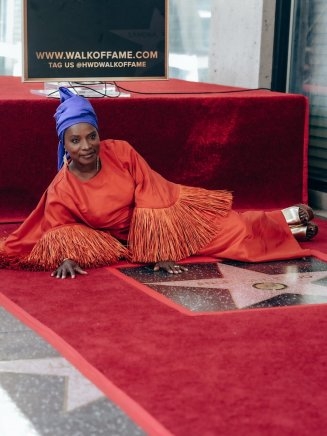
The Hollywood Walk of Fame has welcomed its 2,854th star, and this time, it belongs to a trailblazing African icon—Grammy-winning singer, songwriter, and activist Angélique Kidjo. The historic induction took place on 18 August at 7011 Hollywood Boulevard in Los Angeles, marking a landmark moment as Kidjo became the first African musician and the first Black African artist ever to receive a star on the famed boulevard. The Hollywood Chamber of Commerce officially declared the day “Angélique Kidjo Day,” underscoring the significance of her achievement.
This recognition is more than personal—it’s a celebration of African music’s global influence. For over six decades, the Walk of Fame has honoured entertainment legends, but Kidjo’s inclusion breaks new ground. She joins South African actress Charlize Theron as only the second African-born entertainer to earn a star, highlighting the growing international spotlight on African talent. Her star falls under the Recording category, a fitting tribute to her decades-long contribution to music.
Born in Ouidah, Benin, Kidjo’s journey began with deep roots in West African rhythms. After moving to Paris in the 1980s, she forged a unique sound that fused traditional Fon, Yoruba, and other regional styles with jazz, funk, R&B, and pop. With nineteen studio albums to her name, she has earned five Grammy Awards, a Polar Music Prize, and a spot on TIME Magazine’s list of the 100 Most Influential People. Her work extends beyond music; as a UNICEF Goodwill Ambassador, she advocates for children’s rights and education across Africa and beyond.
The ceremony was a star-studded affair, hosted by Variety correspondent Angelique Jackson. Among the speakers were Oscar-nominated actor Willem Dafoe, a close friend, and Recording Academy CEO Harvey Mason Jr. Beninese actor Djimon Hounsou and Nigerian music star Adekunle Gold also attended, showing solidarity and pride in Kidjo’s milestone. Their presence reflected the global reach and respect she commands within the arts community.
In her emotional acceptance speech, Kidjo emphasized the collective nature of African musical heritage. “We Africans don’t know what we’ve given to the world, and what we continue giving to the world for music to exist,” she said. “It’s not just my star; it’s our star.” Her words resonated with the audience, affirming her role as a cultural ambassador for Africa on the world stage.
This moment stands as both a personal triumph and a powerful statement about representation in global entertainment. As African artists continue to rise internationally, Kidjo’s star serves as a beacon for future generations, proving that excellence from the continent is not only recognized but celebrated at the highest levels.


Leave a Comment