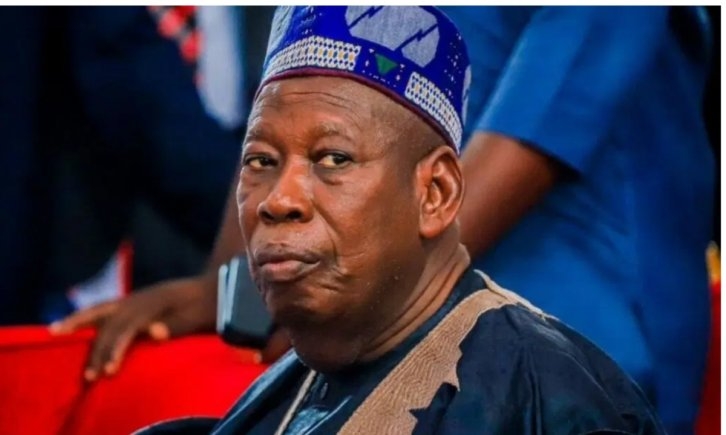
Former APC National Chairman Abdullahi Ganduje has dismissed the chances of Peter Obi and Rabiu Musa Kwankwaso’s presidential ticket under the Nigeria Democratic Congress (NDC) winning Kano State in the 2027 general election, calling the alliance “dead on arrival.” Speaking to journalists on Tuesday, Ganduje, who previously served as governor of Kano State, argued that the ticket lacks the political clout, leadership experience, and governance record necessary to appeal to voters in the northern state. He emphasized that Kano’s electorate demands proven leadership and tangible achievements, which he claims the NDC candidates have yet to demonstrate.
Ganduje questioned Peter Obi’s tenure as governor of Anambra State, asking what legacy he left behind and what concrete development projects he delivered during his time in office. He stressed that Obi’s performance as a state governor does not reflect the kind of leadership required to manage a nation of Nigeria’s size and complexity. According to Ganduje, Obi’s limited experience in governance, particularly in managing large-scale economic and administrative challenges, makes him an unsuitable candidate for the presidency.
On the other hand, Ganduje turned his attention to Rabiu Musa Kwankwaso, the former governor of Kano State, noting that Kwankwaso did not secure re-election for a second term, unlike himself and Ibrahim Shekarau, who both won consecutive terms as Kano governors. He argued that this failure to win re-election reflects a lack of enduring public confidence in Kwankwaso’s leadership. Ganduje insisted that without a strong record of sustained governance, Kwankwaso cannot be seen as a credible vice-presidential candidate capable of supporting a national campaign.
The former APC chairman reiterated his position that the Obi-Kwankwaso ticket is not viable in Kano, a state known for its political influence and strategic importance in national elections. He maintained that Kano voters prioritize stability, security, and development, and that the NDC ticket fails to meet those expectations. Ganduje’s comments come amid growing speculation about political realignments ahead of the 2027 elections, with several opposition parties and candidates positioning themselves for a strong challenge to the ruling APC.
As political discussions intensify across Nigeria, Ganduje’s remarks highlight the deep regional and party-based dynamics shaping the electoral landscape. His assessment underscores the challenges facing opposition candidates in winning over voters in key northern states, particularly those with strong APC roots. The 2027 election is expected to be highly competitive, and Ganduje’s comments may influence voter perception and party strategies in the months ahead.



Leave a Comment