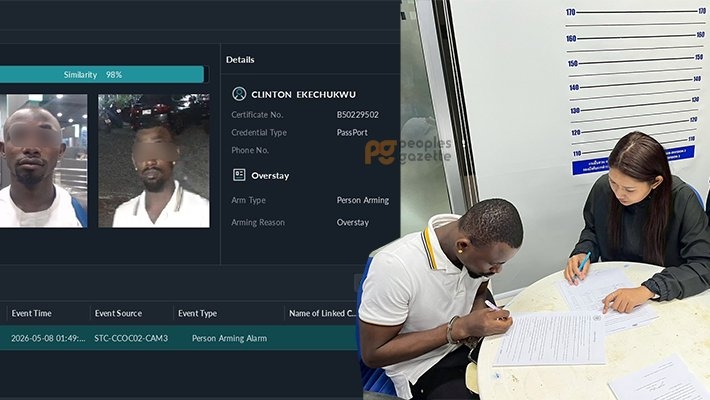
A Nigerian national, Clinton Ubasinachi Ekechukwu, is facing deportation from Thailand after being identified as an illegal immigrant by an artificial intelligence-powered facial recognition system during a nationwide crackdown on immigration violations. The 24-year-old was arrested in Kathu, Phuket, last Friday alongside an Ivorian national, Ousmane Kone, as part of a broader operation targeting foreign nationals overstaying their visas. The arrest came after law enforcement officers used a mobile AI camera system connected to a central database to detect individuals living in the country without legal authorization.
The operation was ordered by Police Lieutenant-General Saksira Puek-am, who directed authorities to intensify efforts against transnational crimes and immigration offences. The facial recognition technology flagged both Ekechukwu and Kone as undocumented foreigners during routine raids in tourist-heavy areas. According to Crime Asia, Ekechukwu had overstayed his visa by nearly two and a half years after entering Thailand under the 60-day visa exemption scheme. Similarly, Kone was found to have lived illegally in the country for over two years beyond his permitted stay.
Both suspects were transferred to the Kathu Police Station for further investigation and are now facing prosecution for immigration violations. Authorities have confirmed that deportation proceedings are underway for both individuals. The use of AI in identifying overstayers has received positive feedback from law enforcement, including the tourist police commander, who emphasized the continued deployment of such technology to enhance border security and immigration control.
This incident follows recent arrests of other Nigerian nationals in Thailand linked to criminal activities. Last week, Samuel Egbujonuma Silas was apprehended during an undercover operation targeting foreigners allegedly involved in drug trafficking. Another Nigerian, Louis Junior, was also arrested after attempting to sell cocaine to undercover officers in a similar crackdown. These cases highlight increasing scrutiny of foreign nationals in Thailand, especially in tourist zones where illegal overstays and criminal networks are common.
The Thai government’s use of advanced technology to combat immigration fraud marks a significant shift in enforcement strategy. The AI facial recognition system is proving effective in identifying individuals who evade detection through traditional methods. As Thailand continues to strengthen its immigration controls, foreign nationals are being urged to comply with visa regulations to avoid legal consequences. The case of Clinton Ubasinachi Ekechukwu serves as a warning to others who may be overstaying their visas, as technological advancements are making it easier for authorities to detect and act against illegal immigration.





Leave a Comment