
The leadership crisis within the African Democratic Congress (ADC) has deepened, with rival factions clashing over legitimacy, court orders, and the role of INEC in determining the party’s national leadership ahead of the 2027 general elections. The dispute, which has seen conflicting interpretations of a Court of Appeal directive, threatens to disrupt the party’s internal cohesion and electoral preparedness. At the heart of the conflict are two competing leadership claims—one led by former Senate President David Mark, and the other by Nafiu Bala, who is supported by the Acting National Publicity Secretary, Bashir Abdul-Mohammed.
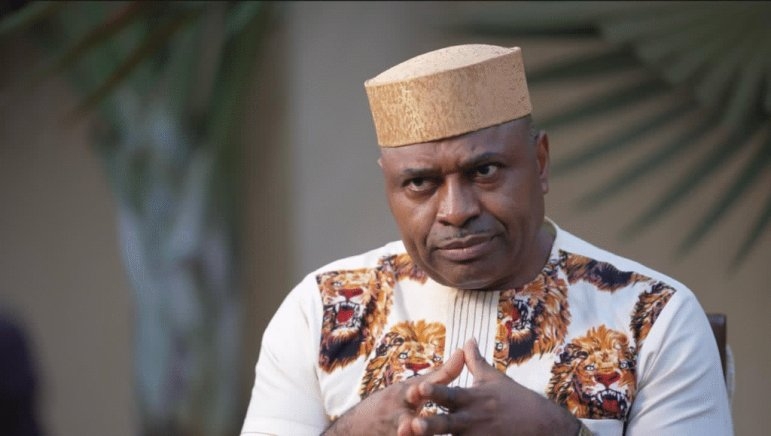
Kenneth Okonkwo, a prominent ADC chieftain and lawyer, accused external forces of attempting to destabilise the party. He dismissed the legal challenge against the Mark-led leadership as baseless, noting that one of the key figures behind the suit had previously resigned from the party. “It is very ridiculous for a man… to go to court to challenge the leadership of ADC,” Okonkwo stated. He argued that INEC’s recognition of the Mark faction remains valid and cannot be undone by an interlocutory injunction. “Once INEC recognises you, you cannot use an interlocutory injunction to stop an action already executed,” he emphasized.
Okonkwo interpreted the Court of Appeal’s directive to maintain the status quo as confirmation of the current leadership’s legitimacy. “Maintaining status quo means you should not do anything that will disadvantage either party. INEC has already recognised us… what the court said confirmed our leadership,” he explained. He rejected claims that the directive referred to a period before INEC’s recognition, asserting that “status quo means there is a national leadership in place.” He also criticised repeated correspondence with INEC, suggesting it was part of a coordinated effort to pressure the commission. “If INEC does that, then know that APC influenced it… they are using these letters to mount pressure,” he alleged. Okonkwo urged all parties to let the courts resolve the matter, warning against propaganda replacing due process.
On the other side, Bashir Abdul-Mohammed, the Acting National Publicity Secretary, described the crisis as self-inflicted and rooted in an unlawful takeover. “We are not in a banana republic… we are all subject to the law,” he declared. He insisted that the party’s constitution clearly states that when the national chairman resigns, the deputy national chairman assumes leadership. “When a national chairman resigns, the deputy national chairman takes over,” he said, affirming Nafiu Bala’s legitimacy as acting chairman. He dismissed the Mark-led faction as “usurpers temporarily sojourning and holding power.”
Abdul-Mohammed rejected the opposing interpretation of the court’s directive, stating that “status quo ante bellum” means returning to the state of affairs before the dispute. “The national chairman is Nafiu Bala,” he insisted. He accused INEC of flagrantly disobeying the court order and warned of potential contempt proceedings. He also dismissed a purported resignation letter attributed to Bala as forged. “Let me dismiss it outright. This is forged. This is not his signature,” he said, adding that the matter is already before the court. While denying external influence, he called on INEC to update its records and formally recognise Bala’s leadership. “We urge INEC to do the needful as soon as possible,” he concluded.
As the legal battle unfolds, the ADC’s internal turmoil could have lasting implications for its political relevance and electoral performance in the coming years.



Leave a Comment